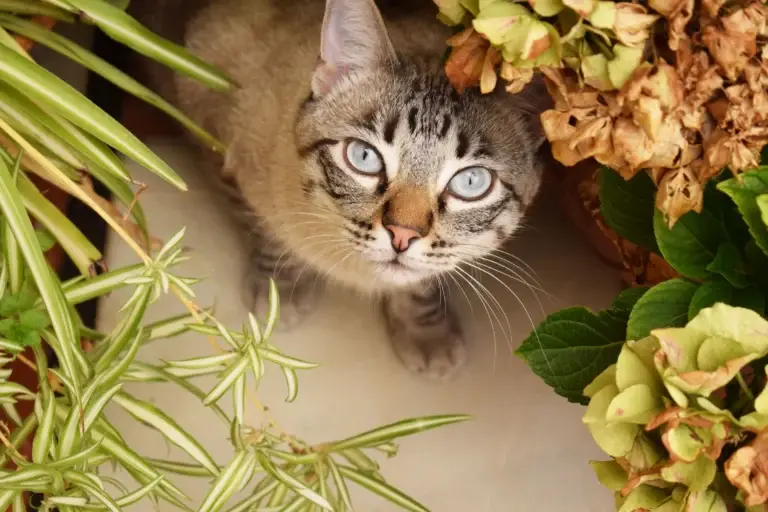
I killed my first spider plant within three weeks of bringing it home. Not because I overwatered it — my cat Miso did it. She chewed through almost every dangling shoot before I even noticed she was interested. What followed was a panicked Google session at midnight, a call to my vet’s after-hours line, and then — relief. The plant was gone, but Miso was completely fine.
That experience sent me down a rabbit hole on spider plants and cat safety that I genuinely wish I had found before that night. So here is everything I learned, organized around the questions that actually matter.
Are Spider Plants Safe for Cats? Here Is the Short Answer
Yes. Spider plants (Chlorophytum comosum) are classified as non-toxic to cats by the ASPCA — one of the most trusted pet poison databases in the world. This means they do not cause organ damage, poisoning, or life-threatening reactions if a cat eats them.
But “non-toxic” does not mean “eat freely with zero consequences.” That distinction matters, and most articles skip right past it. I’ll break it down through seven facts that actually change how you manage this situation.

Fact 1: Spider Plants Are Non-Toxic to Cats — But They Still Contain Saponins
The ASPCA’s plant database lists Chlorophytum comosum as safe for both cats and dogs. No toxic alkaloids. No compounds that damage the liver, kidneys, or nervous system the way lilies or sago palms do.
What spider plants do contain are natural saponins — mild plant compounds found in many common vegetables and herbs too. In small amounts, saponins do nothing harmful. In larger quantities, they irritate the stomach lining and trigger the body’s “eject” response. That means vomiting or loose stool.
This is important context: your cat is not being poisoned. Her body is reacting to an unfamiliar plant substance the same way your stomach might react to eating too much raw spinach.
Fact 2: Your Cat Is Attracted to Spider Plants for a Specific Scientific Reason
When Miso first started showing interest in my spider plant, I assumed she just liked the dangling leaves. That’s part of it — but there’s actually more going on.
Spider plants produce hallucinogenic compounds that are chemically related to the compounds in catnip. The effect is mild, nowhere near as intense as true Nepeta cataria, but it is real. Cats that are sensitive to catnip often respond to spider plants the same way: sniffing intently, rolling nearby, rubbing their faces against the leaves, coming back repeatedly.
Not every cat reacts this way — the sensitivity to these compounds is genetic, and roughly 30 to 50 percent of cats simply don’t respond. But if your cat seems obsessed with your spider plant while your friend’s cat ignores hers entirely, this is exactly why.
Fact 3: How Much Your Cat Eats Determines Whether Anything Happens
Are spider plants safe for cats who only nibble occasionally? Absolutely yes. A single leaf chewed on a Tuesday afternoon is not going to cause any visible symptoms in the vast majority of cats.
The threshold where mild symptoms become possible is when a cat eats a significant portion of the plant — multiple leaves, or repeated sessions over the same day. Even then, what you’re looking at is temporary digestive upset, not an emergency.
Here is what I observed the night Miso destroyed my spider plant. She had eaten what I estimated to be about a third of the plant. She vomited once about ninety minutes later, acted slightly drowsy for an hour, then asked for dinner at her normal time and was completely back to herself by morning.
My vet confirmed this is a typical presentation. Short-lived, self-resolving, no treatment needed unless symptoms escalate.
Fact 4: The Symptoms to Watch For Are Mild and Temporary
If your cat has eaten part of a spider plant, the symptoms that may appear include:
- Vomiting once or twice within the first two hours
- Loose stool or mild diarrhea
- Drooling more than usual
- Pawing at the mouth shortly after eating
- Brief lethargy or slightly glassy-eyed behavior
- Temporary loss of interest in food
These symptoms are the body clearing out an irritant. They typically appear within one to two hours of eating and resolve without any intervention. Fresh water and calm observation is the appropriate response in most cases.
When to call your vet: If vomiting is repeated and your cat cannot keep water down. If diarrhea lasts longer than 24 hours. If your cat seems severely disoriented or lethargic beyond two hours. Or — and this is the big one — if you are not completely certain what your cat ate. If there is any possibility of lily, pothos, or peace lily ingestion, contact your vet or the ASPCA Animal Poison Control Center immediately. Those are genuinely toxic plants and require urgent care.
Fact 5: Spider Plants Are Far Safer Than Most Popular Houseplants
One thing the midnight panic taught me is how many common houseplants are actually dangerous for cats. Once I started checking, I was genuinely surprised by how many I had in my home without thinking twice.
Here is how spider plants compare to other popular choices:
| Plant | Toxic to Cats? | Risk Level | What It Can Cause |
|---|---|---|---|
| Spider Plant | No | Mild GI upset only | Vomiting, soft stool (temporary) |
| Pothos | Yes | Moderate | Oral irritation, vomiting, difficulty swallowing |
| Peace Lily | Yes | High | Vomiting, kidney complications |
| Lilies (true lilies) | Yes | Severe / deadly | Acute kidney failure |
| Boston Fern | No | None | No known symptoms |
| Calathea | No | None | No known symptoms |
| Snake Plant | Yes | Moderate | Nausea, vomiting, drooling |
I replaced my pothos and peace lily that same week. They were beautiful plants but not worth the risk in a home with an adventurous cat. The spider plant stayed — it just moved to a hanging basket.
Spider plants are a great starting point, but they are just one piece of a much larger puzzle. If you are serious about building a cat-friendly indoor garden, you have far more options than most people realize. I went through dozens of species and put together a vet-approved guide covering 21 houseplants safe for cats — everything from trailing plants to bold statement pieces that look beautiful in any room and carry zero toxicity risk for your pet. It is the resource I wish I had found before I started buying plants randomly and hoping for the best.
Fact 6: The Hanging Basket Is the Most Effective Solution (And the Most Beautiful One)
Every “how to keep cats away from spider plants” guide will tell you to use citrus spray, tin foil, or sticky tape. I tried all of those. Miso was not deterred.
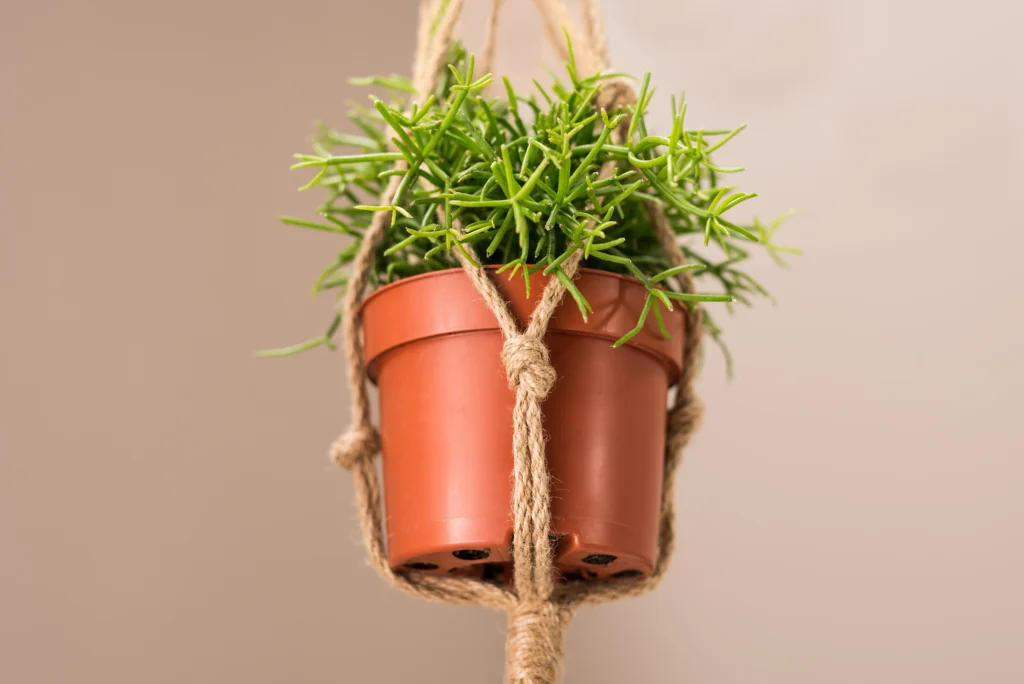
What actually worked was moving the plant to a hanging basket suspended from a ceiling hook near my sunniest window. There are two reasons this works particularly well for spider plants specifically:
First, it eliminates access. A cat cannot easily swipe at leaves that are genuinely out of reach. The dangling spiderettes — those tempting baby plants on long runners that act like cat fishing lures — are no longer at eye level.
Second, spider plants genuinely thrive in hanging baskets. Bright indirect light, good air circulation, room for the babies to trail freely. The plant grew faster and looked healthier after I moved it up. What started as a damage-control decision turned into the best display choice I could have made.
If you want to keep cats away from spider plants without any sprays or deterrents, get the plant off the floor and off the shelf entirely.
Fact 7: Offering Cat Grass Reduces Spider Plant Chewing Significantly
Here is a fact most plant articles don’t mention: cats often chew on houseplants because they crave plant material in their diet. It is a natural behavior, not just curiosity.
When I introduced a small pot of cat grass (Dactylis glomerata or wheat grass, both sold widely as cat grass) and placed it at ground level where Miso could access it freely, her interest in my hanging spider plant dropped noticeably within the first week.
She now has a dedicated chewing spot that is hers. The spider plant is hers to look at. The division has held.
Cat grass is cheap, easy to grow on a windowsill, and gives your cat a legitimate outlet for the plant-eating impulse. If you have a chronic plant-chewer, this is the single most effective behavioral solution I found.
Spider Plant Care Tips That Also Protect Your Cat
Managing a spider plant in a cat household comes down to a few practical habits:
Trim the spiderettes regularly. Those dangling baby plants are what trigger a cat’s hunting instinct most strongly. Trimming them back reduces temptation and encourages the mother plant to put energy into its root system. The babies can be propagated in water and given to friends.
Use a pot with drainage and a saucer. Cats sometimes drink from plant saucers. Spider plant runoff is harmless, but a saucer full of standing water with fertilizer residue is worth keeping clean.
Water when the top inch of soil feels dry — I just push my finger in up to the first knuckle and if it comes out clean and dry, that is my signal. I water mine roughly every eight to ten days in summer and stretch it to every two weeks in winter. Overwatering is genuinely the most common mistake I see people make with spider plants. A stressed, yellowing plant is not just ugly — it seems to attract more cat attention too, though I could not tell you exactly why. My guess is stressed plants release different compounds. Whatever the reason, a healthy plant and a curious cat are easier to manage than a dying plant and a curious cat.
I feed mine every four weeks from April through September — liquid fertilizer, always at half the recommended dose. First time I used full strength, the leaf tips turned brown within three days and I genuinely thought I had killed it. Lesson learned. A plant that is getting fed regularly bounces back from cat damage faster than you would expect. Miso chewed three leaves down to stubs in one sitting and within two weeks you could not even tell.
The Plants You Should Actually Worry About
If you are doing a broader audit of your home, here are the plants that require urgent re-homing or permanent placement out of any cat’s reach:
True lilies (Lilium and Hemerocallis species) — even a small amount of pollen on a cat’s paw that gets licked off can cause acute kidney failure. This is one of the most serious plant toxicities in cats and requires emergency care.
Pothos (Epipremnum aureum) — I had one on my kitchen shelf for almost two years before I realized it was toxic. Gone the same afternoon I found out. It is one of the most common houseplants in the world, trails beautifully, thrives on neglect, and can genuinely hurt your cat. The calcium oxalate crystals cause immediate oral burning, which is why a cat that chews pothos will usually drool heavily and paw at its mouth within minutes. If you have one, re-home it or move it somewhere permanently inaccessible — not just out of reach for now.
Peace lily (Spathiphyllum) — same mechanism as pothos. Often recommended online as a “pet-safe plant” incorrectly. It is not.
Sago palm — one of the most toxic plants for cats and dogs. Causes liver failure.
Spider plants belong in a completely different category from all of these.
Frequently Asked Questions
What happens if a cat eats a spider plant?
Usually nothing serious — and I say that from personal experience, not just research. Miso ate roughly a third of my spider plant in one sitting. She vomited once about ninety minutes later, napped for an hour, then showed up at her food bowl like nothing happened. Spider plants are non-toxic to cats according to the ASPCA, meaning no organ damage, no poisoning, no emergency vet visit needed. If a small amount was eaten, most cats show zero symptoms. If a larger amount was eaten, mild vomiting or loose stool may appear within two hours and clears on its own. Fresh water and calm observation is genuinely all you need in most cases.
Can I have a spider plant if I have cats?
Yes — and it is honestly one of the better plant choices you can make in a cat household. Non-toxic, easy to grow, and stunning in a hanging basket where cats cannot easily reach it. The only real challenge is stopping your cat from treating it like a personal salad bar. In my experience, a hanging basket combined with a pot of cat grass at floor level solved the problem within a week. Miso went from obsessed to completely uninterested once she had her own dedicated chewing spot.
Is a spider plant like catnip?
Not exactly — but there is a real chemical connection. Spider plants produce compounds that are structurally related to those found in catnip (Nepeta cataria) and trigger a similar response in cats that are genetically sensitive to them. The effect is noticeably milder than true catnip — you are unlikely to see your cat going fully wild — but sniffing intensely, rolling nearby, or repeatedly returning to the plant are all common reactions. Roughly 30 to 50 percent of cats have this sensitivity. If your cat ignores your spider plant completely, she is probably in the other half.
Why are cats obsessed with spider plants?
Two reasons working together. First, the mild catnip-like compounds in spider plants trigger a low-level euphoric response in sensitive cats — enough to make the plant feel interesting and worth returning to repeatedly. Second, the physical shape of a spider plant is basically designed to get a cat’s attention. Long arching leaves, dangling baby plantlets swaying on thin runners — to a cat’s brain that looks and moves exactly like prey. You have essentially placed a toy and a mild intoxicant on a shelf and wondered why your cat noticed. Once you understand both triggers the obsession makes complete sense.
What are the disadvantages of spider plants?
For the plant itself, the biggest issues are brown leaf tips from fluoride in tap water, root rot from overwatering, and those dangling spiderettes that cats find irresistible. For cat owners specifically, the main disadvantage is that the plant’s trailing shoots are practically designed to attract a curious cat — which means repeated nibbling, knocked over pots, and a plant that slowly gets destroyed if you do not move it out of reach. None of these are serious problems. Switch to filtered or rainwater for watering, hang the plant from the ceiling, trim the spiderettes regularly, and most of the common issues disappear.
Final Thoughts
Are spider plants safe for cats? Yes — genuinely, reliably, according to the most trusted veterinary poison database available. But that safety comes with one practical caveat: “safe” means non-toxic, not “let your cat eat the whole thing without consequence.”
My approach after Miso’s midnight snacking session: hanging basket near the sunniest window, regular trimming of the spiderettes, and a pot of cat grass at floor level that she actually prefers now. The spider plant is thriving. Miso is thriving. They have reached a peaceful coexistence.
Once you have your spider plant sorted, the next step is thinking about your whole indoor space. A single safe plant is a good start — a home full of them is even better. If you want a curated starting point, my guide to the best cat safe house plants covers the top non-toxic indoor plants across every category: easy beginners, statement plants, trailing plants, and low-light options. Every plant on that list has been cross-checked against the ASPCA database so you can shop and grow with complete confidence.
If you are building a cat-friendly indoor garden, spider plants are one of the strongest starting points. Boston ferns and calatheas are worth adding to your shortlist too. The goal is a home full of greenery where you never have to make a panicked midnight call to your vet — and with the right plant choices, that is completely achievable.
This article is for informational purposes only and is not a substitute for professional veterinary advice. If your cat shows severe or prolonged symptoms after eating any plant, contact a licensed veterinarian or the ASPCA Animal Poison Control Center.
Image Credit:
All images used in this article are sourced from Freepik and are licensed for free use under the Freepik license. Original authors are credited to their respective creators on Freepik.com. Visit freepik.com for full licensing details.
For the most accurate and up-to-date information on plant safety for pets, the ASPCA maintains a comprehensive list of toxic and non-toxic plants for cats. It is a trusted resource every cat owner should bookmark.
If you ever suspect your cat has ingested something harmful, the ASPCA Animal Poison Control Center is one of the most reliable places to get immediate guidance on next steps.
Want to grow your indoor garden the right way? Browse our full collection of Indoor Plant Care Tips for beginner-friendly guides, plant placement ideas, and expert advice to help every plant in your home thrive.