How I Finally Got Plant Food for Indoor Plants Right (After Getting It Wrong for Months)
For eight months I fed my monstera every two weeks without missing a single application. I measured carefully, diluted correctly, applied it right after watering exactly like the bottle said. And for eight months that plant sat on my shelf looking pale, slightly sad, and completely unimpressed with my efforts.
I genuinely thought the fertilizer was bad. I bought a different brand. Same result. I tried a third one — an expensive organic liquid that smelled like low tide at a fish market — and still nothing changed in any meaningful way. The leaves stayed the same dull green. Growth was one new leaf every five or six weeks if I was lucky. I started wondering if my monstera was just a slow plant or if something deeper was wrong with it.
It was not the plant. It was not the fertilizer. It was me — specifically, three things I was doing that quietly cancelled out every application I made.
Once I figured out what those three things were and changed them, my monstera pushed out a new leaf within three weeks. Then another eleven days after that. Then another. The plant had not changed. The product had not changed. My understanding of when and how to use it had.
It took me longer than it should have to see that — but once I did, everything about feeding started making sense.
Before this, I had already kept indoor plants for a few years — nothing serious, just a small collection on shelves and windowsills. Enough to keep them alive, not enough to really understand what they needed.
Most of what I was doing came from blog posts, care guides, and fertilizer labels — which all sounded correct individually but didn’t always work together in practice.
This was the first time I realised that following instructions is not the same thing as understanding how a plant actually responds over time.
What I Was Doing Wrong — And Why It Did Not Work
I want to cover this before anything else because if you are in the same situation I was — feeding regularly, doing everything the label says, and seeing nothing — one of these is almost certainly your problem too.
I was feeding in winter. This sounds obvious in hindsight but nobody told me and I did not think to question it. From October through February I kept up my biweekly feeding schedule because I had built it into a habit. What I did not understand is that a plant receiving three hours of weak winter light through a north-facing window is barely photosynthesizing. It is not growing. It is not using nutrients. Every application I made during those months just sat in the soil, built up as mineral salts, and slowly made conditions worse for the roots — not better.
I was feeding without enough light. Even in summer my monstera was sitting about two metres back from the window. It got light but not much of it. Fertilizer does not create growth — it supports growth that is already happening. A plant in inadequate light does not start growing faster because you fed it. It just accumulates unused nutrients in the soil.
I was following bottle instructions blindly. The recommended dose on most fertilizer labels is written for outdoor container gardens or greenhouse production — not a medium-sized pot on a windowsill. I was applying the full recommended dose monthly, which for a plant in a confined pot with slow water turnover was roughly double what it actually needed. I thought I was being diligent. I was slowly salting the soil.
None of these mistakes showed up as dramatic obvious damage. That is what made them so easy to miss for so long. The plant did not look poisoned. It just looked stuck — pale and static and quietly struggling in a way I kept attributing to the wrong cause.
What Plant Food Actually Does — And Why Potted Plants Need It
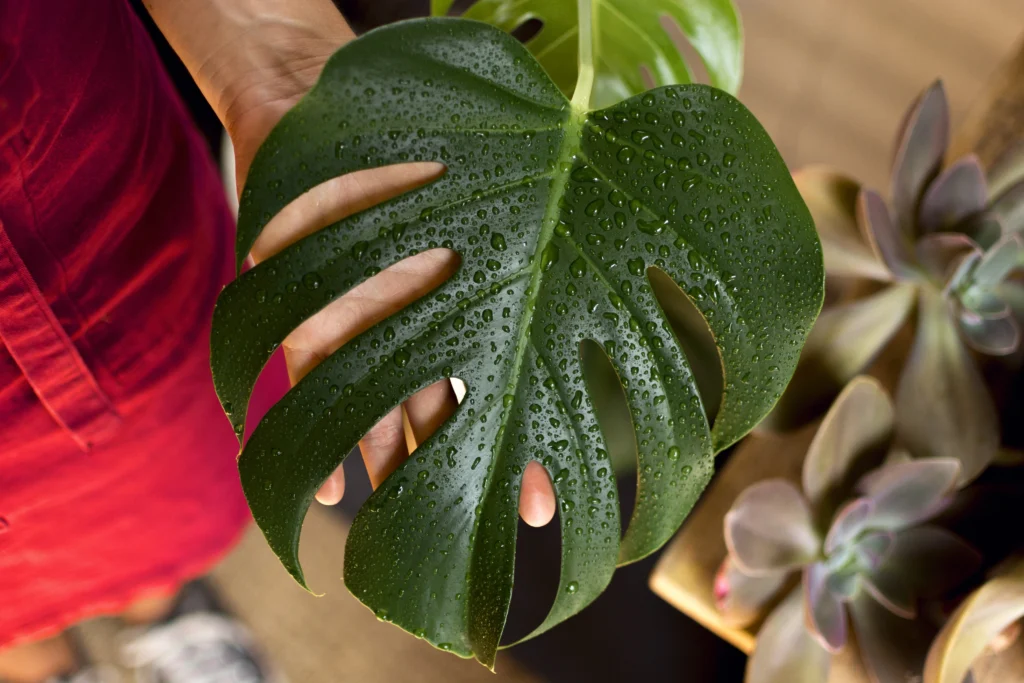
Before getting into what changed for me, it is worth spending a minute on the actual mechanics — because understanding this made everything else make more sense.
Plants do not eat fertilizer the way animals eat food. They produce their own energy through photosynthesis — light plus water plus carbon dioxide becomes sugar, which is the fuel the plant actually runs on. What fertilizer provides is the mineral building blocks that support that process. Think of it this way: photosynthesis is the engine. Plant food is the oil. You can have a full tank of fuel and still seize the engine if the oil runs out.
A potted plant has a specific problem that outdoor plants growing in the ground do not have. Its roots are confined to a fixed volume of soil. Every time you water, small amounts of dissolved minerals drain out of the bottom of the pot. Within two to three months of being potted — sometimes less — that soil has lost most of the nutrients that matter. The plant is not sick. It is just running on empty and has no way to reach anything beyond the edges of its pot.
That is why regular feeding matters for container plants specifically. The question is not whether to feed. It is how to do it without creating new problems in the process.
The NPK Numbers — What They Mean Without the Jargon
Every fertilizer bottle has three numbers on the label separated by dashes. Something like 10-10-10 or 3-1-2. These represent the NPK ratio — the percentage of nitrogen, phosphorus, and potassium in that product.
Nitrogen is the growth nutrient. It drives leafy green growth and plays a central role in chlorophyll production — that deep satisfying green colour in healthy leaves. If your plant looks washed out and pale and is producing fewer leaves than it used to, nitrogen is usually the first thing worth checking. Pothos, philodendrons, monsteras — heavy nitrogen users during the growing season.
Phosphorus supports root development and flowering. For most green foliage plants you do not need a phosphorus-heavy formula. For flowering plants like peace lilies or African violets it matters more.
Potassium works behind the scenes — strengthening cell walls, supporting disease resistance, helping the plant manage water uptake. Plants that seem perpetually stressed despite correct watering often respond well to a potassium boost.
Beyond the big three, quality fertilizers include secondary nutrients — calcium, magnesium, sulfur — and trace minerals like iron, manganese, and zinc. Needed in tiny amounts but still essential. A cheap fertilizer that skips the micronutrients will eventually show gaps in plant health that a better formula would have quietly prevented.
For most leafy houseplants a balanced formula with slightly more nitrogen than phosphorus — something in the 3-1-2 range — covers everything without needing a different product for every plant on the shelf.
Lesson 1 — Timing Mattered More Than the Fertilizer Itself
After my third fertilizer experiment failed I started reading more carefully about what affects nutrient uptake — and kept landing on the same answer: light drives growth and growth drives nutrient absorption. Without one you cannot have the other.
A plant that is barely photosynthesizing in December is not using nutrients. It is resting. The soil is staying wet longer, the roots are barely active, and anything you pour in just accumulates. I had been feeding my monstera through four consecutive winters without once stopping to ask whether it was actually growing or just sitting there.
The seasonal schedule I follow now — and have followed for the past two years without losing a plant to nutrient-related issues:
| Season | Feeding Frequency | Notes |
|---|---|---|
| Spring March to May | Every 2 to 3 weeks | Resume only when you see new leaves pushing out |
| Summer June to August | Every 2 weeks | Peak growing season — most active period |
| Early autumn September | Every 3 to 4 weeks | Start tapering as daylight shortens |
| Late autumn and winter October to February | Stop completely | Rest the plant and the soil both |
The signal to resume in spring is not the date on the calendar — it is the plant. New leaves emerging, growth looking upright and active, roots looking healthy if you check. When the plant is growing, feed it. When it is sitting still, leave it alone.
I want to be honest here: stopping winter feeding did not produce instant dramatic results. It took most of one growing season before I really saw the difference. The improvement was in what did not happen — no more salt crust on the soil, no more mysterious crispy tips, no more roots that looked slightly burned when I repotted. The plant just got gradually healthier and easier to manage.
One situation where the stop-in-winter rule gets more complicated is if you are running grow lights through the colder months. A plant under artificial light that is genuinely producing new growth may benefit from light feeding even in December — but the approach changes significantly. If that is your setup, my guide to LED grow lights for indoor plants covers how artificial lighting shifts the feeding equation and what adjustments actually make sense for year-round growing.
Lesson 2 — Watering Before Feeding Is Not Optional
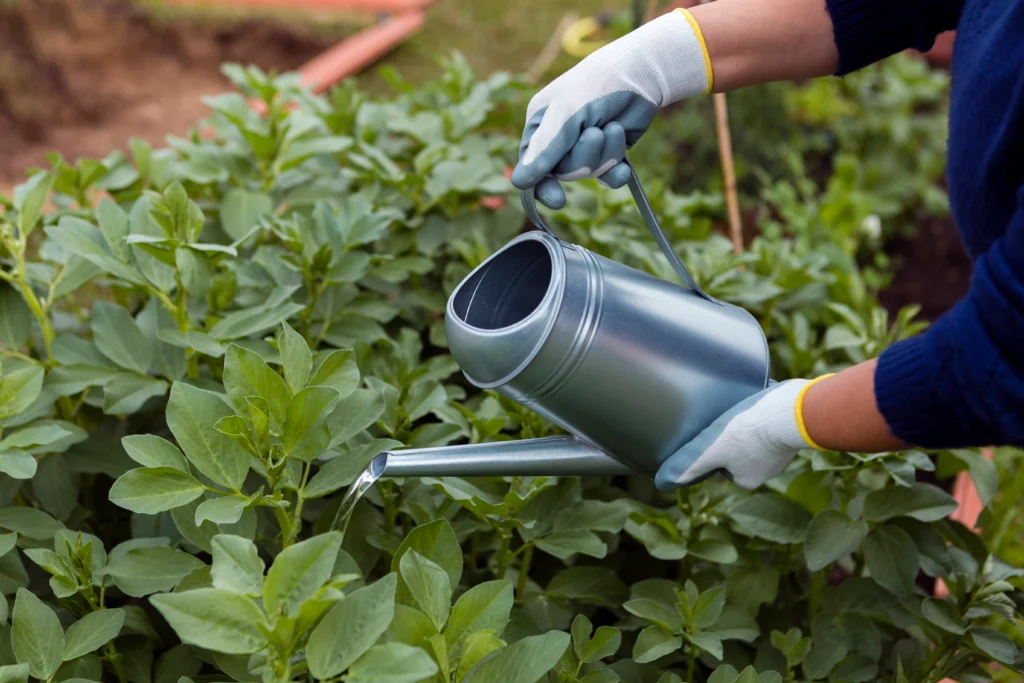
Someone I spoke with a while back — a fairly experienced plant grower with a good-sized collection — described losing three plants in a row to what she could not identify. Healthy-looking plants that suddenly wilted and declined despite regular care. When she walked me through her routine she mentioned she fertilized in the morning and watered the following day.
Dry roots and concentrated fertilizer solution do not mix well. When soil is dry the mineral salts in fertilizer hit roots that are already moisture-stressed and the concentration pulls water out of root cells through osmosis — the same process that makes saltwater undrinkable. Root tips burn within hours. The plant wilts as though underwatered even though the actual problem is chemical damage to the roots.
Water thoroughly first. Wait until the pot has drained. Then apply your diluted fertilizer solution. The pre-moistened soil buffers the fertilizer and the roots absorb nutrients safely rather than being hit with a concentrated dose on empty.
This sounds simple and it is. But it is also the kind of thing you skip when you are in a rush or trying to combine two tasks — and skipping it even occasionally can cause damage that takes weeks to show up and longer to recover from.
I should also mention — I didn’t get this right immediately.
Even after adjusting the dose, I overcorrected once and ended up underfeeding for about a month. The plant didn’t decline, but growth slowed again slightly before stabilising.
That was the point where it clicked that consistency matters more than trying to “fix everything” quickly.
Lesson 3 — Half the Dose, Twice as Often
The instructions on most fertilizer bottles are written for outdoor production or greenhouse settings — not a twelve-centimetre pot on a windowsill with one drainage hole. Full-dose applications in confined pots lead to salt accumulation that builds faster than most people realise and causes damage that looks identical to underwatering on the surface.
When I halved my dose and doubled my frequency the first visible change was not dramatic. My monstera did not suddenly explode with growth in week one. What I noticed after about three weeks was that the new leaf coming in was larger than the previous one — not by a huge amount but noticeably wider. Then the one after that was larger still. By the end of that summer the leaves were coming every ten to twelve days instead of once a month and each one was meaningfully bigger and a noticeably deeper green than what I had been seeing before.
Same fertilizer. Same plant. Same window. Different dose and frequency.
More fertilizer does not mean faster growth. For a plant in a confined pot it usually means more stressed roots and slower progress. Consistent, measured applications at lower concentrations are reliably better than periodic heavy doses — and they give you much more control if something starts going wrong.
Lesson 4 — The Type of Fertilizer You Choose Depends on Your Actual Habits
There are four main formats and I have tried all of them at different points. The honest answer is that the right one depends entirely on how you actually care for your plants — not which one sounds most effective.
Liquid fertilizers are what I use for most of my collection. Fast-acting, easy to control, absorbed quickly through roots. The tradeoff is consistency — you need to remember to apply every two weeks during the growing season. If you are engaged with your plants and check on them regularly this is the most precise option.
Slow-release granules or spikes break down gradually over several months. You push them into the soil and essentially forget about them until the next application period. I used these exclusively for about six months when I was travelling frequently and they genuinely saved several plants from the neglect of an inconsistent schedule. Less precise than liquid but infinitely better than nothing.
Organic options — worm castings particularly — are what I now add to all my pots at repotting time regardless of what liquid fertilizer I am using. Mix a handful into the top layer of potting soil, water it in, and you have a slow gentle background nutrition source with essentially zero burn risk. Fish emulsion is another solid organic option and works extremely well — the smell is genuinely awful but it fades within a day and the micronutrient content is hard to beat.
I would not tell anyone there is one universally correct format. The fertilizer you actually use consistently is better than the theoretically ideal one you forget to apply.
Lesson 5 — Read the Plant Before You Open the Bottle
Plants show nutrient deficiency in patterns that become readable once you have seen them a few times. This is the reference I wish I had had earlier:
| Symptom | Which Leaves | Most Likely Cause |
|---|---|---|
| Uniform yellowing | Older lower leaves first | Nitrogen deficiency |
| Yellow between veins, green veins visible | Newer upper leaves | Iron or manganese deficiency |
| Yellow between veins, green veins visible | Older leaves | Magnesium deficiency |
| Reddish-purple undersides | Young or all leaves | Phosphorus deficiency |
| Brown crispy tips and edges | Leaf margins | Potassium deficiency or salt burn |
| Small distorted new growth at tips | Growing tips only | Calcium or boron deficiency |
| Pale overall, very slow growth across whole plant | All leaves equally | General nutrient poverty |
One thing I want to be clear about: I have misread these symptoms more than once. Nutrient deficiency and overwatering look almost identical in early stages — pale yellowing leaves, slow growth, general lack of vigour. Before I reach for fertilizer now I always check the soil moisture, check the roots if I am uncertain, and make sure the light situation is adequate. A plant in waterlogged soil or deep shade will not respond to fertilizer regardless of how correct the formula or dose is.
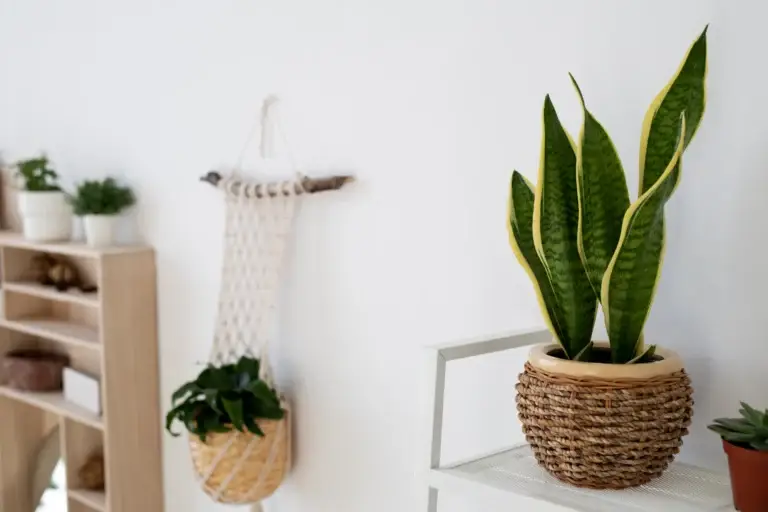
I spent almost three months feeding a snake plant that was declining before I unpotted it and found the roots sitting in soil so compacted it had essentially turned to clay. Fresh well-draining potting mix and three weeks of plain watering and it started recovering without a single fertilizer application. Sometimes the problem is not nutrition at all.
Lesson 6 — Flushing the Soil Is Part of the Feeding Routine
Even with careful half-dose applications every two weeks, mineral salts accumulate in potting mix over time. Every fertilizer application leaves behind a small residue — undissolved or unabsorbed minerals that build up with each cycle. The visible signs are a white crust forming on the soil surface or around the rim of terracotta pots. That is salt and it is your signal that the soil needs clearing out.
Every two to three months I take each pot to the sink and run water through it slowly for three to four minutes — a steady continuous flow that saturates the soil completely and drains out the bottom repeatedly. Not rushed. The goal is to dissolve and carry away the accumulated salt layer and reset the soil environment before the next round of feeding.
I started doing this after noticing persistent brown crispy tips on my pothos despite correct watering. I had been attributing it to low humidity and adding a pebble tray which made no difference. A soil flush and a month without feeding cleared the tips within three weeks. I have done it every two to three months since and have not had the same problem return.
If you see white crust on the soil or pot surface, or brown crispy tips on otherwise healthy leaves, flush before you feed again. Adding more fertilizer to already salt-loaded soil is the exact wrong response.
Lesson 7 — Know When to Stop Completely
Three situations where I stop feeding entirely and do not resume until something specific changes:
Late autumn through winter. Already covered above but worth repeating — no active growth means no nutrient uptake means feeding is pointless and potentially damaging. The date I stop is when I notice growth has clearly slowed and new leaves have stopped appearing. The date I resume is when I see a new leaf unfurling in spring. Not a date on the calendar.
When the plant is sick, wilting, or freshly repotted. A stressed plant cannot absorb nutrients normally. Fertilizer applied to damaged or recovering roots causes burn rather than recovery. After repotting I wait at least three to four weeks before introducing any feeding — usually longer if the plant is showing any signs of transplant stress. Let it stabilise first.
When I see salt crust forming ahead of schedule. If I see white deposits on the soil surface before my usual flush date, I stop feeding immediately, flush the soil, and give it two weeks of plain watering before resuming at a reduced dose. The soil is telling me something is accumulating faster than expected — I listen to it.
Nutrition is one piece of the puzzle but it works best when the rest of your care routine is also dialled in. Watering correctly, managing humidity, choosing the right soil, knowing when to repot — all of these interact with how well your plant absorbs what you feed it. My guide to indoor plant care tips covers the ten habits that made the most consistent difference across my whole collection and pairs well with everything covered here.
What Actually Made the Difference
After eight months of feeding correctly and seeing nothing, then two years of adjusting my approach and watching things genuinely improve, the honest summary is this:
Stopping winter feeding made the biggest single difference. Not a new product, not a better NPK ratio, not a more expensive organic formula. Just stopping applications during the months when my plants were not growing and could not use what I was giving them. The soil got healthier, the roots got healthier, and when spring came the plants responded to feeding in a way they never had before.
Half dose at double frequency outperformed full dose monthly every single time. Smaller more consistent inputs gave roots a steady manageable supply instead of periodic overload. Growth became more regular and predictable. Leaves came in larger and stayed greener.
Reading the plant before reaching for the bottle saved me from several mistakes. Not every pale yellow leaf is a nutrient problem. Not every slow-growing plant needs fertilizer. Sometimes it is the soil, sometimes it is the light, sometimes it is the roots. Fertilizer applied to the wrong problem does not solve anything — it usually adds another problem on top of the original one.
I still do not have a perfect routine. I still occasionally forget to flush until I see the white crust. I still sometimes misjudge when spring has genuinely arrived versus when I just want it to have arrived. But the baseline is reliable now in a way it was not when I was following instructions blindly and hoping the product would do the work for me.
Feed thoughtfully. Stop completely in winter. Flush regularly. Those three things together changed my indoor garden more than anything else I tried.
One thing I did not expect when I started paying closer attention to feeding was how much it forced me to notice everything else — light, watering patterns, even how quickly the soil was drying.
Fertilizer turned out not to be a separate task but something that only works properly when the rest of the environment is already working.
Frequently Asked Questions
Can I use plant food every time I water?
Some fertilizers are made for this at very low concentrations and it can work — but it needs precise dilution every single time without fail. Most people find a clear schedule easier to manage and less risky. Every two weeks at half strength during the growing season gives consistent results without the salt buildup that comes from constant feeding even at low doses.
What happens if I never fertilize my indoor plants?
They will not die quickly but they will slowly lose vigour over one to two growing seasons — smaller leaves, paler colour, less frequent growth. Some plants handle it better than others. A snake plant will look passable for years. A monstera or banana plant will make its hunger pretty obvious within a few weeks of the growing season starting.
Why are my leaves still yellow after I started feeding?
Give it several weeks and check whether the problem might actually be overwatering rather than deficiency — the symptoms look nearly identical. Leaves that were already yellow before you started feeding will not recover and will eventually drop. If yellowing continues on new growth after four to six weeks of correct feeding, unpot the plant and look at the roots before increasing the dose.
How do I know if I have over-fertilized?
White salt crust on the soil or pot rim, brown crispy tips on otherwise healthy leaves, wilting despite adequate watering. If you see these flush the soil immediately with plain water and hold off on feeding for at least a month. In serious cases roots will look brown and slightly burned at the tips when you unpot — trim back to healthy tissue and repot in fresh mix before resuming feeding at a reduced dose.
Do succulents and cacti need plant food?
Yes but much less and at much lower concentrations. They evolved in nutrient-poor environments and over-fertilizing them produces soft weak growth that rots easily. During their growing season a diluted low-nitrogen fertilizer once a month at quarter strength is plenty. In winter nothing at all.
If something feels off with your plant, there is a good chance fertilizer is not the first thing to fix — even though it is usually the first thing people reach for.
Image Credit
All images used in this article are sourced from Freepik and are licensed for free use under the Freepik free license. Original creators are credited to their respective authors on Freepik.com. Visit freepik.com for full licensing details. All trademarks and brand names referenced remain the property of their respective owners.
Authoritative Sources
Wisconsin Horticulture Extension — hort.extension.wisc.edu/articles/houseplant-care — science-based guidance on houseplant fertilization timing and nutrient requirements.
Royal Horticultural Society — rhs.org.uk — evidence-based advice on plant nutrition, NPK ratios, and seasonal feeding for container plants.