
Indoor Plant Care Tips: The Complete Beginner’s Guide to Healthy Houseplants
You bought a pothos because someone told you it was impossible to kill. Three weeks later, the leaves were yellow, mushy, and drooping like it had given up on life entirely. Sound familiar?
Most beginners don’t fail at plant care because they’re neglectful. They fail because nobody told them the real rules — that “water once a week” means nothing without checking the soil first, that a sunny windowsill can actually be too much for some plants, or that overwatering kills far more houseplants than underwatering ever does.
This guide exists to fix that. Whether you’re working with a dark apartment, a forgetful schedule, or a complete lack of gardening experience, these indoor plant care tips will help you keep plants alive, healthy, and actually growing. No textbook fluff, no vague advice — just the practical stuff that actually works.
Quick Answer: What Indoor Plants Actually Need to Survive
Before diving deep, here’s the short version. Every houseplant needs five things, and when something goes wrong, it almost always traces back to one of these:
Light — Plants use light for photosynthesis, the process that fuels growth. Too little and they slowly starve. Too much direct sun and the leaves scorch. Most common houseplants do best in bright indirect sunlight.
Water — Not on a schedule, but based on the soil. Most plants want to dry out slightly between waterings. Consistently wet soil suffocates roots.
Drainage — This is the one people skip. Without drainage holes in your pot, excess water has nowhere to go. It pools at the bottom, roots sit in it, and rot sets in within weeks.
Humidity — Most popular houseplants are tropical plants. They evolved in humid environments. Dry indoor air — especially in heated or air-conditioned rooms — stresses them out slowly.
Stable environment — Plants hate sudden changes. Cold drafts, heating vents, and being moved around constantly all cause stress that shows up as dropped or yellowed leaves.
That’s the core of it. Everything else in this guide builds on these five foundations.
Understanding Indoor Plant Basics
How Indoor Plants Use Light
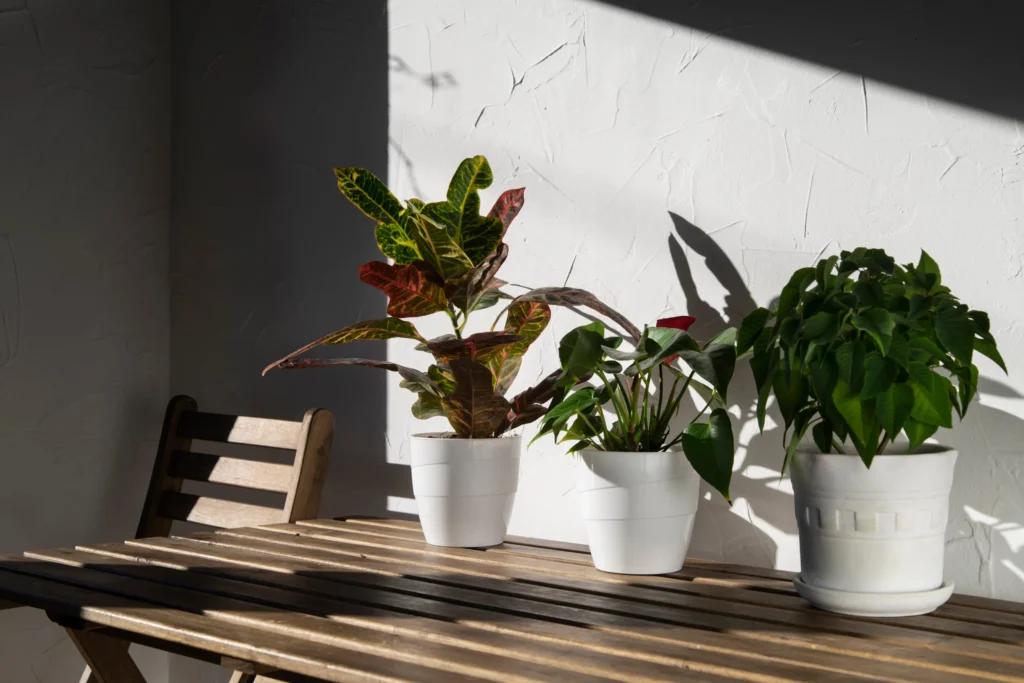
Photosynthesis is how plants convert light into energy. Without adequate light, plants can’t produce the chlorophyll they need, growth slows dramatically, and leaves start to pale or yellow. That’s why a snake plant in a dark hallway will survive for months but never really thrive — it’s running on minimal energy reserves.
Different plants have evolved different light tolerances based on where they grow in the wild. Monstera and philodendron are jungle floor plants — they’re accustomed to filtered light coming through a canopy. Succulents and aloe vera come from open, sun-drenched environments. Matching a plant to your available light is one of the most important decisions you’ll make.
Direct vs Indirect Sunlight
Direct sunlight means rays hitting leaves without obstruction — typically within two feet of a south or west-facing window. Most foliage houseplants can’t handle this. Their leaves weren’t built for it and they’ll get scorched brown patches within days.
Indirect sunlight is what most popular houseplants prefer. This means bright light that doesn’t hit the plant directly — a few feet back from a window, near an east-facing window, or in a room with large windows but no direct beam. If you can comfortably read a book there without turning on a lamp, most plants will manage fine.
Low light means away from windows, in corners, or in rooms with small north-facing windows. Very few plants genuinely thrive here — the ZZ plant, cast iron plant, and sansevieria are the real survivors in these spots.
Why Drainage Holes Matter
This might be the single most overlooked indoor plant care tip: drainage holes aren’t optional. They’re essential.
When you water a plant in a pot without drainage holes, water accumulates at the bottom of the pot. The roots at the lower layer sit in that stagnant water, oxygen gets cut off, and fungal activity increases. The result is root rot — a condition that’s hard to reverse once it takes hold.
If you love a decorative pot without holes, use it as a cachepot. Keep your plant in a plain nursery pot with drainage, then slide it inside the decorative outer pot. After watering, tip out any water that collects in the outer pot within 30 minutes.
Understanding Soil Moisture
Soil moisture levels tell you when to water — not the calendar. The most reliable method is the finger test: push your finger about an inch into the soil. If it feels damp, wait. If it feels dry at that depth, it’s time to water most tropical plants.
For succulents and cacti, let the soil dry out completely before watering again. For moisture-loving plants like peace lily or calathea, water when the top half-inch is dry.
A moisture meter makes this even easier. They’re inexpensive, last for years, and eliminate the guesswork entirely. You push the probe into the soil and read a number — no more squeezing pots trying to guess.
Why Humidity Affects Houseplants
Most popular houseplants — pothos, monstera, philodendron, calathea, peace lily — are tropical plants. In their natural habitat, humidity sits between 60–80%. The average heated home in winter drops to 30–40%, sometimes lower.
Low humidity causes leaf edges to turn brown and crispy. Calathea is famously sensitive to this. The tips of spider plants and dracaena brown in dry air too.
You don’t need to turn your home into a greenhouse. Grouping plants together raises local humidity slightly as they release moisture through transpiration. A humidity tray — a shallow tray filled with pebbles and water placed under your pot — raises humidity around the plant without waterlogging roots. For very sensitive plants, a small humidifier nearby makes a real difference.
Temperature Requirements for Indoor Plants
Most houseplants are comfortable in the same temperature range humans prefer: roughly 60–80°F (15–27°C). Problems arise at the extremes.
Cold drafts from windows in winter stress tropical plants quickly. Leaves near a cold pane can look fine in the morning and drop by evening. Keep plants at least 6 inches from single-pane windows in cold climates during winter.
Heating vents are equally damaging. Hot, dry air blasting directly onto plants desiccates leaves and dries out soil too rapidly. The fiddle leaf fig is especially notorious for reacting badly to both cold drafts and vent heat — it drops leaves the moment it’s uncomfortable.
Best Indoor Plant Care Tips for Beginners
Choose Plants Based on Your Lighting Conditions
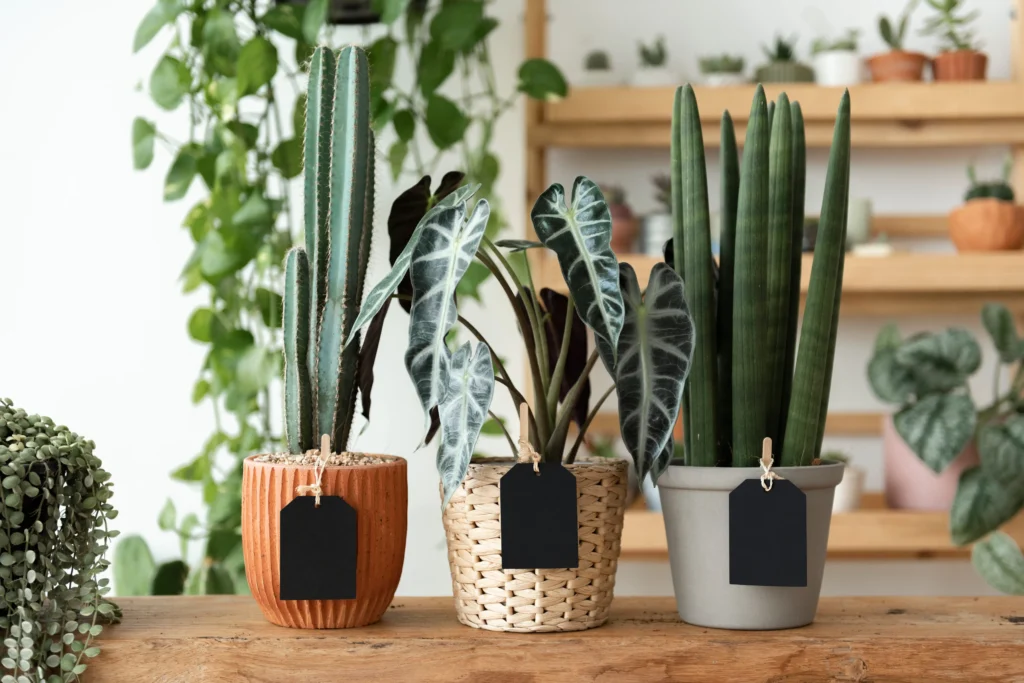
The most common beginner mistake is buying a plant based on looks, taking it home, then putting it wherever there’s space. Within a month, the plant is struggling and you’re wondering what went wrong.
Start by assessing your space honestly. Which way do your windows face? How many hours of light does the brightest spot get? Is there a corner that barely sees natural light?
Then match plants to those conditions. Low-light apartment? Stick to snake plants, ZZ plants, pothos, and Chinese evergreen. Bright south-facing windows? Succulents, aloe, rubber plants, and jade plants will love you.
Learn How Often to Water Indoor Plants Properly
The honest answer to “how often should I water indoor plants?” is: it depends, and you have to check.
Watering frequency changes with the seasons, pot size, plant type, humidity, and how much light a plant gets. A pothos in a terracotta pot near a sunny window in summer might need water every 4–5 days. The same pothos in a plastic pot in winter might go 10–12 days.
Use these general guidelines as a starting point, then adjust based on what you observe:
| Plant Type | General Watering Frequency |
|---|---|
| Succulents & cacti | Every 2–4 weeks |
| Snake plant / ZZ plant | Every 2–3 weeks |
| Pothos / philodendron | Every 7–10 days |
| Monstera | Every 7–14 days |
| Calathea / peace lily | Every 5–7 days |
| Fiddle leaf fig | Every 7–10 days |
| Orchids | Every 7–10 days |
Always check the soil before watering. When in doubt, wait another day.
Avoid Overwatering and Root Rot
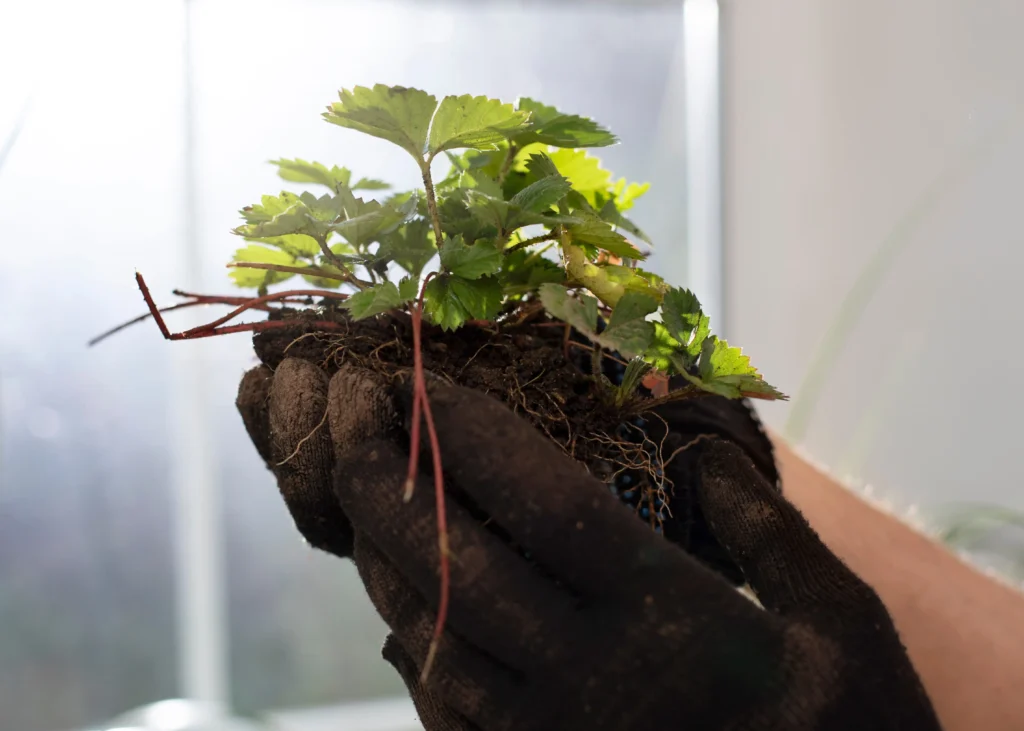
Overwatering is the number one cause of houseplant death. It’s not dramatic — it’s slow and subtle, which makes it tricky to catch.
Early signs of overwatering include yellowing lower leaves, mushy stems near the soil line, and soil that never seems to dry out between waterings. If you catch it early, reducing watering frequency and improving drainage can save the plant.
Root rot is what happens when overwatering continues long enough. Roots turn brown, mushy, and start to smell. To treat it, you need to unpot the plant, trim away all the rotted roots with clean scissors, let the healthy roots air-dry for an hour, then repot in fresh, well-draining potting mix with added perlite.
Prevention is far easier than treatment. Drainage holes, appropriate pot size, and checking soil moisture before watering will protect most plants from ever reaching this point.
Use the Right Potting Mix
Regular garden soil is too dense for indoor containers. It compacts over time, restricts drainage, and suffocates roots. Most houseplants need a well-aerated potting mix.
A standard indoor potting mix works for most tropical plants, but adding about 20–30% perlite (the white volcanic particles) improves drainage and aeration significantly. For succulents and cacti, use a dedicated cactus and succulent mix, which drains even faster.
Calathea and orchids have more specific needs — calathea prefers a mix that retains some moisture, while orchids need a coarse bark-based mix that’s nothing like regular potting soil.
Understand Pot Size and Repotting
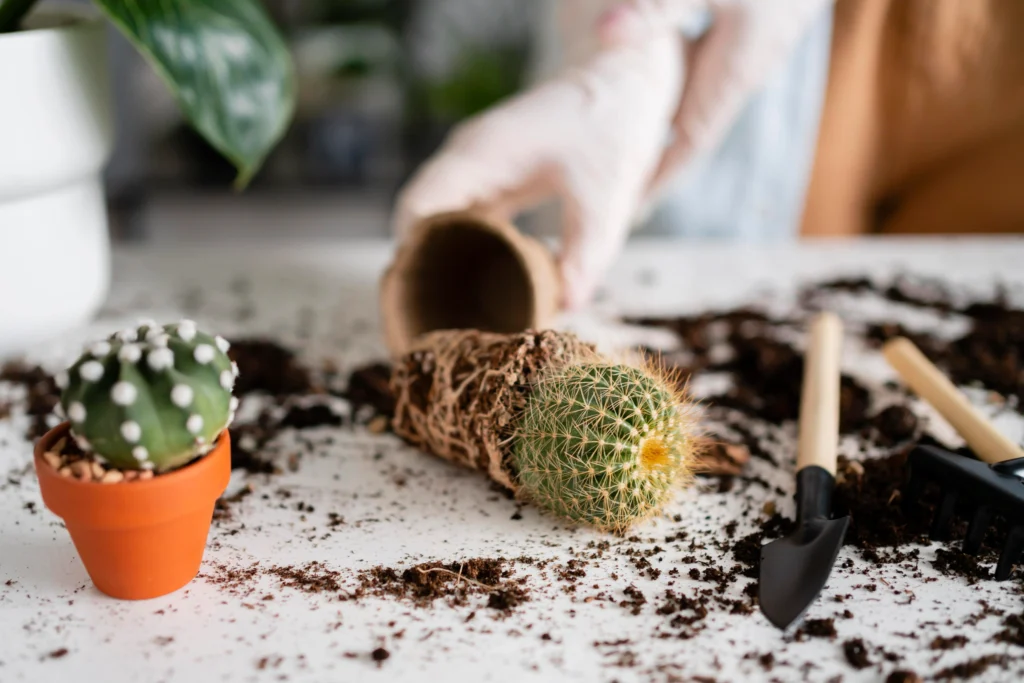
Bigger isn’t better when it comes to pots. A pot that’s too large holds more soil than the roots can absorb moisture from, which leads to — you guessed it — overwatering problems even when you’re being careful.
When repotting, go up one size at a time. If a plant is in a 4-inch pot, move it to a 6-inch pot, not a 12-inch pot. The rule of thumb: the new pot should be about 1–2 inches larger in diameter than the current one.
Signs a plant needs repotting include roots growing out of the drainage holes, roots circling visibly at the soil surface, the plant drying out much faster than usual, or the pot looking noticeably small relative to the plant’s size.
Spring is the best time to repot most houseplants — they’re coming out of winter dormancy and actively growing, which helps them recover from any transplant stress quickly.
Improve Indoor Humidity Naturally
You don’t need fancy equipment to raise humidity for your plants. A few simple methods:
Plant grouping — cluster plants together. As they transpire, they create a slightly more humid microclimate around each other.
Humidity trays — fill a shallow tray with pebbles, add water until it reaches just below the pebble surface, and set your pot on top. The evaporating water raises humidity immediately around the plant.
Misting — spraying leaves lightly with water raises humidity temporarily. The effect doesn’t last long, but it helps. Avoid misting plants with fuzzy leaves (like African violets) or in poorly ventilated rooms where wet leaves can encourage fungal problems.
Humidifier — if you have calathea, orchids, or other humidity-loving plants that constantly show brown edges, a small cool-mist humidifier near the plant group makes a noticeable difference.
Clean Plant Leaves Regularly
Dust accumulates on indoor plant leaves and blocks light absorption — literally reducing the amount of energy a plant can produce from photosynthesis. Glossy-leaved plants like rubber plants, monstera, and peace lily are particularly affected.
Every few weeks, wipe large leaves down with a damp cloth. For smaller-leaved plants, a gentle shower under room-temperature water in the sink works well. Beyond light absorption, clean leaves are much easier to inspect for early signs of pest infestation.
Rotate Plants for Balanced Growth
Plants grow toward their light source. If you leave a plant in the same position indefinitely, the side facing the window gets lush and full while the back side grows sparse and leggy.
A simple quarter-turn every time you water keeps growth even and balanced. It takes two seconds and makes a visible difference over a few months.
Prune Dead Leaves and Weak Growth
Pruning isn’t just cosmetic. Removing dead, yellowing, or damaged leaves directs the plant’s energy toward healthy growth instead of trying to salvage dying tissue.
Use clean, sharp pruning shears. Dirty or dull blades can tear tissue and introduce pathogens. After removing a diseased leaf, wipe the blade with rubbing alcohol before moving to another plant.
For leggy stems — particularly on pothos or philodendron — cutting back the stem encourages the plant to push out new growth from lower nodes, resulting in a fuller, bushier plant.
Feed Plants With Proper Fertilizer
Indoor plants in containers can’t access the nutrient replenishment that happens naturally in the ground. Over time, potting mix gets depleted. Fertilizing compensates for this.
Most houseplants benefit from a balanced liquid fertilizer (like a 10-10-10 or 20-20-20 NPK ratio) diluted to half-strength and applied every 2–4 weeks during the growing season (spring and summer). Stop or reduce fertilizing in fall and winter when most plants slow their growth.
Over-fertilizing is a real problem — it causes salt buildup in the soil, which burns roots. If you see white crusty deposits on the soil surface or pot edges, flush the soil thoroughly with water to clear the salt buildup.
Check Plants Weekly for Problems
A quick weekly visual check — maybe 5 minutes total — catches problems before they escalate. Look at both the top and bottom of leaves for pests. Check the soil moisture. Notice if any leaves have changed color or texture since last week.
Most plant problems, caught early, are completely solvable. The same problem ignored for a month might mean losing the plant.
Keep Plants Away From Temperature Stress
Cold drafts from windows in winter, heating or air conditioning vents, being placed outside on a cold night and then brought in — all of these cause plant stress that manifests as sudden leaf drop, browning, or wilting.
Find a spot for each plant and commit to it. Moving plants frequently, especially to dramatically different conditions, stresses them unnecessarily.
Best Low Light Indoor Plants That Thrive Easily
Low light doesn’t mean no light. It means plants that can handle limited natural light — a few feet from a window, a north-facing room, or a spot that gets indirect light for a short part of the day. Here are the ones that actually hold up.
Snake Plant (Sansevieria)
Care difficulty: Very easy Watering: Every 2–3 weeks (less in winter) Light tolerance: Low to bright indirect Beginner friendliness: Excellent
The snake plant might be the most forgiving houseplant in existence. It tolerates low light, inconsistent watering, and dry air without complaint. The only real way to kill it is to overwater it — the roots rot quickly in soggy soil.
Place it in a terracotta pot for added protection against overwatering. It’ll grow slowly in low light but stay healthy. The architectural, upright leaves look great in modern interiors.
ZZ Plant (Zamioculcas zamiifolia)
Care difficulty: Very easy Watering: Every 2–3 weeks Light tolerance: Low to medium indirect Beginner friendliness: Excellent
The ZZ plant stores water in its thick rhizomes (underground stems), making it extremely drought tolerant. It can go several weeks without water without showing distress. It grows slowly but reliably, even in rooms with very little natural light. One caveat: all parts of the plant are toxic if ingested, so keep it away from pets and young children. [See our pet-safe plant guide for alternatives.]
Pothos (Epipremnum aureum)
Care difficulty: Easy Watering: Every 7–10 days Light tolerance: Low to bright indirect Beginner friendliness: Excellent
Pothos is the classic starter plant for good reason. It adapts to almost any indoor light condition, trails beautifully from shelves or hangs from baskets, and communicates clearly when it needs water — the leaves start to look slightly limp before they truly droop. It’s very forgiving about watering delays. The golden pothos variety is especially tolerant of low light conditions.
Chinese Evergreen (Aglaonema)
Care difficulty: Easy Watering: Every 7–10 days Light tolerance: Low to medium Beginner friendliness: Excellent
The Chinese evergreen — also sold as aglaonema — is a colorful, hardy plant that tolerates low light remarkably well. The darker-leaved varieties handle the lowest light; brighter variegated varieties with pink or red markings need a little more light to maintain their color. It’s tolerant of irregular watering and adapts well to typical indoor humidity levels.
Peace Lily (Spathiphyllum)
Care difficulty: Easy to moderate Watering: Every 5–7 days Light tolerance: Low to medium indirect Beginner friendliness: Good
Peace lily is one of the few flowering plants that tolerates low light well. It communicates its needs clearly — when it needs water, the leaves droop noticeably, giving you a built-in warning system. It does prefer more humidity than average, and its leaf tips will brown in very dry air. Keep it away from pets; it’s toxic to cats and dogs. [More in our pet-safe houseplant guide.]
Cast Iron Plant (Aspidistra elatior)
Care difficulty: Very easy Watering: Every 2–3 weeks Light tolerance: Low to medium Beginner friendliness: Excellent
The name says everything. The cast iron plant earned its reputation by tolerating conditions that would kill almost anything else — deep shade, infrequent watering, temperature fluctuations. Growth is slow, but it’s virtually indestructible with basic care.
Philodendron
Care difficulty: Easy Watering: Every 7–10 days Light tolerance: Low to medium indirect Beginner friendliness: Excellent
Both heartleaf philodendron and the larger split-leaf varieties adapt well to indoor conditions. They’re forgiving of lower light and irregular watering. Like pothos, the heartleaf variety trails attractively and grows quickly with minimal fuss. The leaves will be smaller and the growth slower in low light, but the plant stays healthy.
How to Care for Indoor Plants Without Sunlight
Can Plants Survive Without Natural Light?
Strictly speaking, plants need some form of light for photosynthesis — they can’t survive in total darkness. But “without sunlight” in practical terms usually means a room with no windows, or very limited light that falls far short of what even low-light plants prefer.
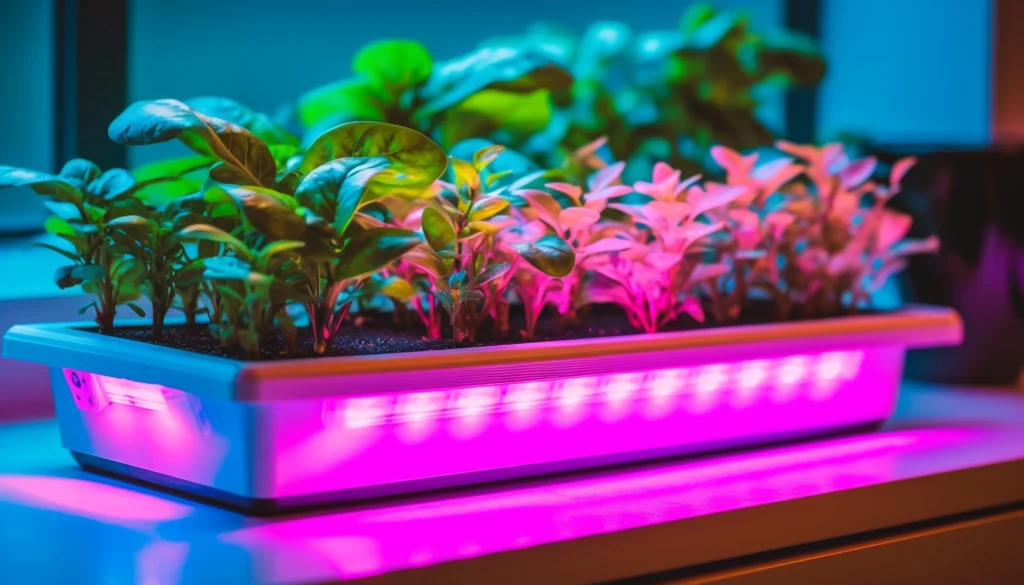
In those situations, grow lights are the answer. Modern LED grow lights are efficient, affordable, and genuinely effective at replacing natural light for a wide range of plants.
Best LED Grow Lights for Indoor Plants
Full-spectrum LED grow lights are the current standard. They cover the full range of wavelengths that plants use — blue spectrum for leaf and stem growth, red spectrum for flowering. They run cool, consume less energy than older fluorescent options, and last for years.
For most leafy houseplants, a mid-range full-spectrum LED bulb in a regular lamp fixture works well. You don’t need an elaborate setup — a simple clip-on grow light or a grow light bulb in a desk lamp positioned 6–12 inches above the plant is enough for many species.
For a windowless office or basement, a grow light fixture mounted above a plant shelf handles multiple plants efficiently.
How Long Grow Lights Should Stay On
Most plants need roughly the equivalent of their natural day length. For tropical houseplants, 12–16 hours of grow light per day is typically recommended. Set your light on a timer — consistency matters more than intensity for most plants.
Plants also need darkness for rest. Running grow lights 24 hours a day actually hinders growth and stresses plants. A timer eliminates the guesswork.
Watering Plants in Dark Rooms
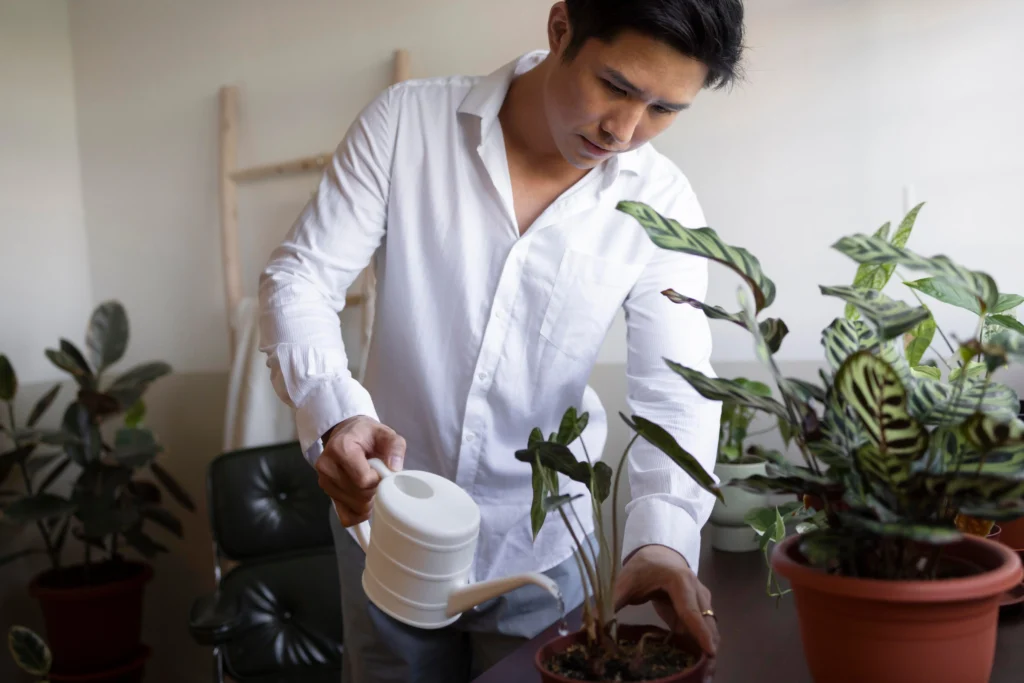
Without natural light, evaporation slows significantly. Plants in low-light or artificial-light setups dry out much more slowly than plants near bright windows. This means you’ll water far less frequently, and the risk of overwatering increases.
Always check soil moisture before watering in these conditions. Plants under grow lights only will likely need water significantly less often than the standard guidelines suggest.
Best Plants for Windowless Rooms
Even with grow lights, some plants adapt better to artificial light environments:
- Pothos — adapts to almost any light source
- Snake plant / sansevieria — thrives under fluorescent and LED light
- ZZ plant — grows slowly but reliably under grow lights
- Peace lily — tolerates artificial light well
- Chinese evergreen / aglaonema — handles low-intensity artificial light
- Dracaena — adapts well to grow light setups
Common Indoor Plant Problems and Solutions
Yellow Leaves
Yellow leaves are the most common complaint in indoor plant care — and the most frustrating because they have so many possible causes.
Most likely cause: Overwatering. When roots are waterlogged and oxygen-deprived, they can’t function properly, and the plant can’t absorb nutrients even when they’re present. Lower leaves yellow first.
Other causes: Too little light (leaves lose their ability to produce chlorophyll), natural aging (the oldest leaves yellow and drop as a normal process), nutrient deficiency (especially nitrogen), or sudden cold exposure.
Fix: Check soil moisture first. If the soil has been staying wet, reduce watering frequency and improve drainage. If watering is appropriate, assess light levels and consider whether the plant has been in the same potting mix for more than a year without fertilizing.
Brown Leaf Tips
Brown, crispy tips are almost always a humidity or water quality issue.
Most likely cause: Low humidity. The leaf margins, particularly tips, dry out when the surrounding air is too dry.
Other causes: Fluoride or chlorine sensitivity (particularly in spider plants and dracaena), salt buildup from over-fertilizing, inconsistent watering, or the plant sitting in drafts.
Fix: Increase humidity through grouping, humidity trays, or a humidifier. Switch to filtered or room-temperature water left out overnight (which allows chlorine to off-gas). Flush the soil periodically to clear salt buildup.
Drooping Leaves
A drooping plant is telling you something — but not necessarily that it needs water.
Most likely cause: Underwatering — the soil is very dry and the plant has depleted its moisture reserves. Water thoroughly and the plant usually recovers within a few hours.
Also possible: Overwatering, which destroys roots so the plant can’t move water up to the leaves even when soil is wet. If the soil is wet and the plant is still drooping, overwatering is likely the culprit.
Other causes: Temperature shock (sudden cold), being recently repotted (transplant stress), or pest damage at the roots.
Root Rot
Root rot is caused by fungi that thrive in consistently waterlogged soil. It’s serious but treatable if caught early.
Signs: Yellowing leaves, soft mushy stem base, foul smell from the soil, roots that are brown and slimy rather than white and firm.
Fix: Remove the plant from its pot. Trim all brown, mushy roots with sterile scissors. Let healthy roots air dry for 30–60 minutes. Apply a small amount of cinnamon or a diluted hydrogen peroxide solution to cut surfaces (natural antifungal). Repot in fresh, well-draining mix — not the same soil the rot developed in.
Fungus Gnats
Fungus gnats are tiny, mosquito-like flies that hover around houseplant soil. The adult flies are annoying but mostly harmless. The larvae, which live in the top layer of moist soil, can damage young roots.
Cause: Consistently moist topsoil, which provides ideal conditions for eggs to hatch.
Fix: Let the top two inches of soil dry out completely between waterings — this breaks the life cycle. Yellow sticky traps catch adult flies. For persistent infestations, a soil drench with Bacillus thuringiensis israelensis (BTi), a naturally occurring bacteria sold as “mosquito dunks,” kills larvae without harming plants.
Spider Mites
Spider mites are tiny arachnids that feed on plant sap, causing stippled, pale damage on leaves. Fine webbing between leaves or along stems is the telltale sign.
Conditions they love: Hot, dry indoor air — particularly common in heated rooms in winter.
Fix: Isolate the affected plant immediately. Wipe leaves down with a damp cloth, rinse thoroughly, then apply neem oil or insecticidal soap diluted per label instructions. Repeat every 5–7 days for 3–4 weeks. Increasing humidity makes conditions less hospitable for them going forward. [For comprehensive treatment, see our indoor plant pest guide.]
Slow Growth
All houseplants grow more slowly indoors than in their natural environment — that’s normal. But very slow or stalled growth often points to something fixable.
Common causes: Insufficient light (the most common), root-bound plant with no room to expand, depleted soil lacking nutrients, or winter dormancy slowing things down naturally.
Fix: Assess and improve light (or add grow lights). If the plant is root-bound, repot in spring. Fertilize during the growing season if you haven’t been.
Moldy Soil
White, fuzzy mold on the soil surface looks alarming but is usually harmless saprophytic fungi breaking down organic matter in the potting mix.
Cause: Poor air circulation combined with consistently moist soil.
Fix: Allow the soil to dry out more between waterings. Improve air circulation around the plant. Scrape off the moldy top layer and replace with fresh soil. Repotting in well-draining mix with better aeration prevents recurrence.
Indoor Plant Watering Guide
How to Test Soil Moisture Properly
Finger test: Push your index finger an inch into the soil. Moist = wait. Dry = water. This works for most plants but requires practice to calibrate accurately.
Moisture meter: Insert the probe about halfway down the pot. Most meters use a 1–10 scale. For most tropical houseplants, water when the reading drops to 3–4. For succulents, wait until the reading hits 1–2.
Lifting the pot: With experience, you can gauge soil moisture by how heavy the pot feels. A dry pot feels noticeably lighter than a watered one. Takes a while to develop the feel, but it’s fast once you do.
Wooden chopstick method: Insert a clean wooden chopstick into the soil and leave it for 30 seconds. If it comes out with damp soil clinging to it, wait to water.
Signs of Overwatering
- Yellowing leaves, particularly lower and older leaves
- Soft, mushy stem at the soil line
- Soil that stays wet for more than 1–2 weeks consistently
- Leaves that look swollen or translucent (water-soaked appearance)
- Fungus gnats (they breed in consistently moist topsoil)
- Foul odor from the soil
Signs of Underwatering
- Drooping or wilting leaves (soil is dry to the touch)
- Dry, crispy leaf edges or tips
- Potting mix pulling away from pot edges (extreme dryness)
- Soil that feels bone dry an inch down
- Very slow growth with no other explanation
Watering During Winter vs Summer
Plants generally need less water in winter for two reasons: growth slows or stops, meaning less water is consumed, and lower temperatures slow evaporation. A plant that needed water every 7 days in July might go 14+ days in January.
In summer, the opposite applies. High temperatures, more light, and active growth mean plants dry out faster. Check soil moisture more frequently during warm months.
Don’t water on autopilot year-round — adjust with the seasons.
Best Water Temperature for Houseplants
Room temperature water is ideal for most houseplants. Very cold water shocks tropical plant roots and can cause leaf spots on some plants (calathea and African violets are particularly sensitive to cold water on their leaves).
If your tap water is very cold, fill the watering can and let it sit for an hour or two before using. This also allows chlorine to off-gas, which benefits sensitive plants like spider plants and dracaena.
Indoor Plant Care by Season
Spring Plant Care
Spring is when most houseplants wake up. Growth resumes after winter dormancy, which makes this the best time for repotting, propagating, and increasing fertilizer.
- Start fertilizing again after a winter break
- Check if any plants need repotting — roots coming out of drainage holes are a sure sign
- Move plants back toward windows as days get longer
- Watch for pest activity, which increases as warmth returns
Summer Plant Care
Summer brings intense light and heat, which creates new challenges.
- Watch for soil drying out faster than usual — check moisture more frequently
- Protect plants from harsh afternoon sun in south-facing windows (filter with a sheer curtain)
- If temperatures indoors spike above 85°F (30°C), keep plants away from windows that intensify heat
- Increase watering frequency gradually as temperatures climb
Fall Plant Care
Fall is a transition period. Growth slows, days shorten, and it’s time to start pulling back.
- Begin reducing fertilizing frequency as growth slows
- Check plants for pests before they come inside if any spent summer outdoors — quarantine them for two weeks first
- Move plants back from windows as sun angles change and light decreases
- Start reducing watering frequency slightly
Winter Plant Care
Winter is when most beginner mistakes happen. Overwatering in winter is especially damaging because plants aren’t actively growing and using water, so soil stays wet far longer.
- Reduce watering frequency across the board
- Stop fertilizing most plants (or use a very diluted dose once a month at most)
- Watch for heating vents — dry air and direct heat stress plants
- Keep plants away from cold window glass
- Consider grow lights if natural light becomes very limited
Indoor Plant Care Tools That Actually Help
You don’t need much equipment to care for houseplants well. But a few specific tools genuinely make a difference:
Moisture meter — Eliminates guesswork about when to water. The most useful tool for beginners who tend to overwater. Models from $10–15 work perfectly well for home use.
Pruning shears — Clean, sharp cuts matter. A good pair of pruning shears or even sharp scissors dedicated to plants prevents tearing tissue and spreading disease. Clean blades with alcohol between plants.
Grow lights — Necessary for dark apartments or north-facing rooms. Full-spectrum LED grow lights are efficient and affordable. A basic clip-on grow light costs around $20–40 and can make a dramatic difference in plant health.
Humidifier — Worth the investment if you keep calathea, orchids, or other humidity-sensitive plants. A small cool-mist humidifier maintains 50–60% humidity without turning your home into a sauna.
Watering can with a narrow spout — Precision matters. A narrow spout lets you direct water at the soil, not onto leaves or everywhere else. Overhead watering on plants that dislike wet foliage (calathea, African violet) encourages fungal issues.
Terracotta pots — Porous terracotta allows soil to dry out more evenly than plastic, which is protective against overwatering. They’re particularly good for succulents, snake plants, ZZ plants, and any other plant prone to root rot. Heavier and less forgiving if dropped, but worth it.
Pebble trays — Inexpensive, passive humidity solution. Fill with pebbles and water. Effective, simple, and requires no electricity.
Easy Indoor Plant Care Routine for Busy People
The biggest barrier to consistent plant care isn’t time — it’s not knowing what to check for. Here’s a simple system that takes less than 10 minutes a week and keeps your plants genuinely healthy.
The Weekly Check (5–10 minutes)
Pick one consistent time each week — Sunday morning, Monday evening, whatever fits your schedule — and do a quick walk through your plants.
Check moisture: Push your finger into the soil of each plant. Make a mental note or a quick list of which ones need water.
Look at leaves: Any yellowing? Brown tips? Spotting? The sooner you notice a change, the easier it is to address.
Check underneath leaves: Spider mites and scale insects hide there. A 5-second look can catch an infestation early.
Water what needs it: Water thoroughly until water flows from drainage holes. Let it drain before putting the pot back in its saucer or cachepot.
Monthly Tasks
- Wipe down glossy leaves with a damp cloth
- Rotate each plant a quarter turn
- Check if any plants look root-bound
- Apply diluted fertilizer during growing season
Seasonal Tasks
- Spring: Repot root-bound plants, resume fertilizing, check for pests
- Summer: Increase watering frequency, watch for heat stress
- Fall: Reduce fertilizing, prepare for lower light
- Winter: Reduce watering, watch for dry air damage, check heating vent proximity
The 3-Rule Simplification
If you remember nothing else from this guide, remember these three things:
- Check soil before watering — never water on autopilot
- Drainage holes are non-negotiable — or use a nursery pot inside a decorative cachepot
- Match the plant to your light — stop trying to grow a sun-loving plant in a dark corner
Those three rules handle the vast majority of plant care problems before they start.
Frequently Asked Questions
Can indoor plants survive without sunlight?
Plants need some form of light — they can’t photosynthesize in complete darkness. However, grow lights can substitute effectively for natural sunlight. Full-spectrum LED grow lights run for 12–16 hours a day can support many houseplants in rooms with no windows. For the most resilient options, pothos, snake plant, ZZ plant, and peace lily adapt best to artificial light conditions.
Why are my indoor plant leaves turning yellow?
Yellow leaves most often indicate overwatering — roots that are oxygen-deprived from sitting in wet soil can’t take up nutrients properly. Other causes include insufficient light, natural aging (the oldest leaves die off regularly), cold exposure, or nutrient deficiency. Check your watering frequency and soil drainage first, then assess light levels.
How often should I water houseplants?
Watering frequency can’t be set to a fixed schedule — it depends on plant type, pot size, potting mix, season, and your home’s humidity and temperature. The reliable approach is to check soil moisture before every watering. Most tropical plants do well when watered when the top inch of soil is dry. Succulents and drought-tolerant plants like ZZ plant and snake plant want the soil to dry out completely before the next watering.
What is the easiest indoor plant to keep alive?
The snake plant (sansevieria) and ZZ plant are consistently the easiest for beginners. Both tolerate low light, irregular watering, and dry air. Pothos is another excellent beginner choice — it communicates its needs clearly and bounces back quickly from minor neglect.
Why do indoor plants get fungus gnats?
Fungus gnats breed in the moist top layer of potting soil. Consistently wet soil at the surface provides the conditions their larvae need to hatch and develop. The solution is simple: allow the top two inches of soil to dry out completely between waterings. This breaks the breeding cycle without harming most houseplants. Yellow sticky traps catch the adult gnats while you’re addressing the underlying moisture issue.
Do indoor plants need fertilizer?
Yes, though the frequency and timing matters. Houseplants in containers can’t access the natural nutrient cycle that outdoor plants benefit from. During the growing season (spring through summer), most plants benefit from a diluted balanced liquid fertilizer every 2–4 weeks. In fall and winter, most plants slow their growth significantly, and fertilizing during dormancy can cause more harm than good from salt buildup.
What are the best plants for beginners?
For beginners, look for plants that tolerate imperfect care: pothos, snake plant, ZZ plant, Chinese evergreen, heartleaf philodendron, spider plant, and rubber plant. All of these adapt to a range of light conditions, forgive inconsistent watering, and communicate problems clearly before they become critical.
What causes brown tips on indoor plant leaves?
Brown leaf tips most commonly result from low humidity — dry indoor air desiccates the leaf margins. Other causes include fluoride or chlorine sensitivity (common in spider plants and dracaena), salt buildup from over-fertilizing, or inconsistent watering. Try increasing humidity around the affected plants and switching to filtered or room-temperature tap water left out overnight.
How do I know if my plant needs repotting?
Watch for roots growing out of drainage holes, roots circling visibly at the soil surface, or the plant drying out unusually quickly after watering. If a plant’s growth has stalled and it’s been in the same pot for more than two years, it’s likely root-bound. The best time to repot is spring, when the plant is entering its active growing season and can recover from transplant stress more quickly.
Is direct sunlight bad for houseplants?
For most popular houseplants — pothos, philodendron, monstera, calathea, peace lily — yes, direct sun causes leaf scorch. These plants evolved under forest canopies with filtered light. Plants that handle direct sun include succulents, cacti, aloe vera, jade plant, and some herbs. Even sun-tolerant plants can scorch if moved suddenly from low light to direct sun — acclimate them gradually.
Why is my monstera not growing?
Stalled monstera growth usually comes down to light, root space, or nutrients. Monstera needs bright indirect light to grow vigorously — a dimly lit room will slow it dramatically. If it’s been in the same pot for more than two years, it may be root-bound and need upsizing. And if you haven’t fertilized during the growing season, the potting mix may be depleted. Check all three before assuming something more serious.
Can I use tap water for my indoor plants?
For most houseplants, tap water is fine. Some plants — particularly spider plants, dracaena, and calathea — are sensitive to the fluoride and chlorine in tap water, which shows up as brown tips. Letting tap water sit uncovered overnight allows chlorine to off-gas. Using a water filter, rainwater, or distilled water eliminates the issue entirely for sensitive species.
Final Thoughts
Here’s the thing about indoor plant care: it’s genuinely not complicated. The learning curve feels steep at first because there’s a lot of conflicting advice, and plants can be frustratingly opaque about what they need. But the fundamentals are simple, and once you internalize them, most of the guesswork disappears.
Check the soil before you water. Make sure your pots drain. Give each plant the light it actually needs — not just the light you have available. Look at your plants every week, not once a month.
Consistency matters far more than perfection. You’ll overwater something. You’ll forget to check a plant for three weeks and come back to crispy leaves. Every experienced plant owner has killed plants — usually more than a few. The goal isn’t a flawless track record; it’s building enough of a routine that problems get caught early and solved before they become permanent.
Start with one or two forgiving plants. Build confidence with those. Then branch out into the more demanding ones — the fiddle leaf fig, the calathea, the orchid — when you feel ready.
Your indoor plant care journey starts with a single healthy plant. Give it the right light, check the soil before you water it, and make sure water can drain out of the pot. That’s the whole foundation. Everything else in this guide is just making that foundation stronger.
Looking to improve your indoor gardening skills even further? These beginner-friendly plant care guides cover the most common houseplant problems, lighting setups, watering mistakes, and easy-care indoor plants for every home.
Related Indoor Plant Guides
- Easy House Plants to Take Care for Beginners
- Why Indoor Plant Leaves Turn Yellow and How to Fix Them
- Best Soil Mix for Healthy Indoor Plants
- Overwatering vs Underwatering Indoor Plants Explained
- Common Reasons Why Indoor Plants Die
- How to Take Care of Indoor Plants Without Sunlight
Visual references and plant care illustrations used throughout this guide are for educational purposes and sourced from free image libraries.
All images used in this article are sourced from free-to-use visuals available on Freepik