Overwatering vs Underwatering: How to Tell the Difference
I watered my pothos every single day for two weeks because the leaves kept drooping. I assumed it was thirsty. The drooping got worse. The leaves started yellowing. I watered more. By the time I finally unpotted it the roots were brown, mushy, and smelled like something had been sitting in a puddle for a month.
I had not been neglecting that plant. I had been drowning it while genuinely believing I was helping it.
The frustrating part about overwatering and underwatering is that they look almost identical from the outside. Drooping leaves. Yellowing. Slow growth. A plant that just looks wrong without giving you an obvious reason why. Most people — myself included for longer than I would like to admit — respond to all of those symptoms the same way. More water. Which is exactly the right fix for one problem and exactly the wrong fix for the other.
It took me longer than it should have to figure that out.
At that point I only had a handful of plants — mostly pothos, a snake plant, and one peace lily on a shelf near a window. Nothing complicated, which is probably why I assumed watering would be the easiest part to get right.
It turned out to be the one thing I misunderstood the most.
The Short Answer If You Just Need It Quickly
Overwatering means the roots have been sitting in wet soil for too long and cannot breathe. Underwatering means the soil has been completely dry for too long and the roots have started to shut down.
One drowns the roots. The other starves them.
The symptoms look similar because both situations stress the plant in ways that show up in the same place — the leaves. But the soil tells a completely different story for each one, and the soil is where you should be looking first.
What Is Actually Happening Inside the Plant
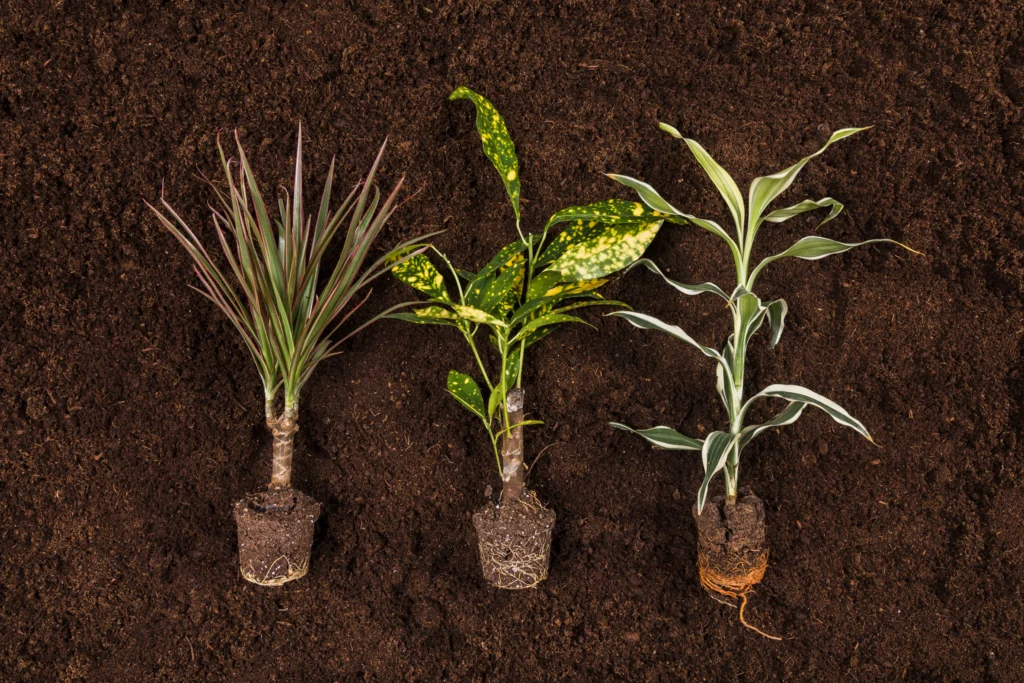
Understanding what goes wrong internally makes the difference between the two much easier to recognise — and easier to fix without making things worse.
When you overwater, the soil stays saturated and the air pockets in the potting mix fill completely with water. Roots need oxygen to function. In waterlogged soil they cannot get it. They begin to suffocate and within days — sometimes faster in warm conditions — fungal organisms that cause root rot move in. The roots start breaking down. They lose their ability to transport water and nutrients upward even though the soil is full of both. The plant droops and yellows not because it has too much water but because the damaged roots can no longer deliver anything to the leaves.
This is why overwatered plants look dehydrated. In a way, they are — just not for the reason you would expect.
When you underwater, the opposite happens. The soil dries out completely, the roots lose contact with moisture, and the plant begins to lose water pressure internally. Leaves are held upright partly by that internal pressure — called turgor pressure — and when it drops the plant wilts. If the drought continues long enough the roots physically shrink and stop functioning efficiently even after water is eventually added, which is why a severely underwatered plant sometimes takes several days to fully recover after watering.
Side by Side — What Each Problem Actually Looks Like
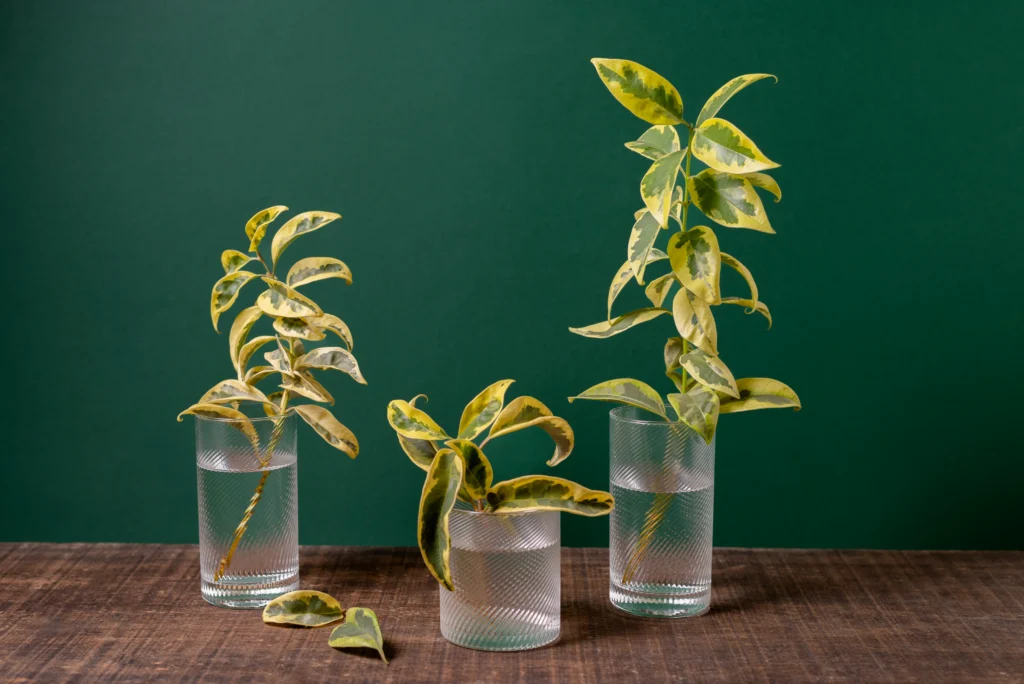
This is the comparison that would have saved me months of confusion if someone had put it in front of me clearly:
Leaves Overwatering — yellow, soft, sometimes translucent at the edges. The leaf feels limp and slightly squishy rather than firm. May develop dark spots or a mushy texture in advanced cases. Underwatering — dry, crispy, brown at the tips and edges. The leaf feels papery and stiff rather than soft. Curl inward in many species as the plant tries to reduce water loss.
Soil Overwatering — stays wet and heavy for days after watering. May smell slightly sour or musty. Surface can develop a green tinge from algae or mold in severe cases. Underwatering — completely dry, sometimes pulling away from the edges of the pot. In very dry soil the surface may crack slightly. Feels almost dusty when you press into it.
How the plant holds itself Overwatering — droopy and soft. The stems and leaves hang limply but they feel waterlogged rather than papery. Almost like the plant is melting slightly. Underwatering — droopy but stiff. Leaves curl or fold but feel dry and firm rather than soft. The plant looks collapsed rather than wilted.
Growth Overwatering — very slow, weak. New leaves may come in small or pale. In advanced cases growth stops completely as root function deteriorates. Underwatering — stops entirely. The plant redirects whatever resources it has toward survival rather than new growth. Any new leaves that do appear are usually tiny.
The Biggest Mistake Most Plant Owners Make
Most people do not kill their plants through neglect. They kill them through guessing.
The most common pattern I have seen — in my own plants and in conversations with other growers — is watering on a fixed schedule without checking the soil first. Every Sunday. Every three days. Every time the plant looks slightly less perky than it did yesterday. The schedule feels responsible. It feels like care.
I followed that kind of routine for months because it felt structured and consistent. Looking back, I was not responding to the plant at all — I was just following a system I assumed was correct.
This turned out to be part of a bigger issue in how I was caring for all my plants — not just watering. Light, soil, and even pot choice were slightly off in ways I didn’t notice at the time. I go deeper into that in my indoor plant care tips guide, where I break down the habits that made the biggest difference across my whole setup.
But a fixed schedule ignores the one variable that actually matters: what the soil is doing right now.
A plant in a bright sunny window in August may genuinely need water every five days. The same plant in the same pot in the same spot in January may need water every sixteen days. The schedule that was right three months ago is almost certainly wrong now. Soil drying time changes with seasons, with temperature, with humidity levels, with how actively the plant is growing. A fixed schedule cannot account for any of that.
I watered my pothos on a schedule for almost a year. I felt like a responsible plant owner. My pothos spent most of that year sitting in soil that was consistently wetter than it should have been and I attributed the slow pale growth to everything except the obvious cause.
How to Actually Check — Two Methods That Work
The finger test is the most reliable method for most plants and costs nothing.
Push your finger into the soil up to the first knuckle — roughly one to two inches deep. If the soil feels completely dry at that depth, the plant is ready to be watered. If it still feels moist or cool, put the watering can down and check again in two or three days. This takes about three seconds and removes almost all of the guesswork that leads to both problems.
For plants that prefer to dry out more completely between waterings — succulents, snake plants, ZZ plants — push your finger in further, to the second knuckle. If it is still moist at that depth, wait longer.
Lifting the pot is a method I started using for larger pots where the finger test cannot reach the deeper soil layers.
A pot that feels noticeably light when you lift it is almost certainly dry throughout. A pot that feels heavy is still holding significant moisture even if the surface looks dry. This becomes intuitive surprisingly quickly once you start doing it regularly — you develop a sense for what each pot should feel like when it is ready for water versus when it still has moisture deeper down.
A cheap soil moisture meter — the kind with a simple dial showing wet, moist, or dry — also works well if you find the finger test unreliable. I used one for about six months when I was first learning and it was genuinely useful for building an accurate intuition before I trusted my own judgment.
The part that made this harder to learn was that the damage does not show up immediately. By the time the plant looks visibly worse, the roots have usually been sitting in the wrong conditions for days or even weeks.
That delay is what causes most of the confusion.
How to Fix an Overwatered Plant
Stop watering immediately. This sounds obvious but the instinct when a plant looks bad is to do something — and watering is the thing most people default to. In an overwatered plant, more water at this point makes the situation worse.
Move the pot somewhere with good airflow and let the soil dry out as completely as possible. If your home is humid this may take longer than expected. Do not cover the pot or put it in a tray of water. You want evaporation working in your favour.
If the soil smells bad — sour, musty, like something decomposing — that is root rot already present. Unpot the plant and look at the roots. Healthy roots are white or light tan and firm. Rotted roots are brown or black and mushy, and they will pull apart easily when you touch them. Trim every rotted root back to healthy tissue using clean scissors. Wipe the blades with rubbing alcohol between cuts if the rot is extensive.
Repot into fresh dry well-draining potting mix with added perlite. Do not water immediately after repotting — wait three to five days, then water lightly. The plant needs time to recover root function before it can handle another full watering cycle.
I want to be honest: not every overwatered plant recovers. If the root system is more than sixty or seventy percent rotted the plant may not have enough healthy root tissue left to support recovery. I have lost plants this way despite doing everything correctly after the fact. The earlier you catch it the better the odds.
How to Fix an Underwatered Plant
Water slowly and deeply. The first time I tried this, I rushed it and poured too quickly — most of the water just ran straight through without soaking in properly. Slowing down made a bigger difference than the amount of water itself. Do not flood the pot all at once — in severely dry soil the water often runs straight through gaps between the shrunken soil and the pot edges without actually being absorbed. Pour slowly, pause, let the soil absorb, pour again.
A useful method for a very dry plant is bottom watering — set the pot in a shallow tray of water for twenty to thirty minutes and let the soil absorb moisture from below. This ensures even saturation throughout the root zone rather than just the top layer.
After watering, check the plant again in twenty-four hours. A mildly underwatered plant should show visible improvement — leaves firming up, stems standing straighter — within a day. A severely underwatered plant may take two to three days to recover fully and may drop some of the most damaged leaves regardless.
Do not immediately start watering more frequently after a dry spell. Return to checking the soil before each watering and let the plant’s actual moisture level guide you rather than a schedule. The goal is not to compensate for the dry period — it is to return to a responsive watering habit going forward.
A Pattern I Kept Noticing
Every time I was convinced my plant needed more water, it turned out it needed less. Not always — but often enough that it became a genuine check I run on myself now. Before I water anything I ask whether the urge to water is coming from checking the soil or from looking at the plant and making an assumption.
Looking at a plant and deciding it needs water is almost always a guess. Checking the soil and deciding it needs water is almost always correct.
The leaves lie. Or more accurately — the leaves show you that something is wrong without telling you what. The soil tells you what.
When the Problem Is Not Actually About Water
This section matters because sometimes you do everything right with watering and the plant still looks wrong. Before you diagnose a watering problem it is worth ruling out these three things:
Light. A plant in inadequate light cannot photosynthesize efficiently regardless of how well you water it. Yellowing leaves, slow growth, and general lack of vigour in a plant that is being watered correctly is often a light problem being misread as a water problem. Move it closer to a light source and observe for two to three weeks before changing anything else.
Wrong soil. Potting mix that holds too much moisture — dense, compact, no perlite or drainage material — makes overwatering almost inevitable even with careful watering habits. The soil stays wet far longer than it should and the roots never get the air exposure they need between waterings. If you are consistently dealing with overwatering despite careful technique, check the soil.
No drainage. A pot without drainage holes is a root rot trap regardless of how carefully you water. Water accumulates at the bottom of the pot where it cannot evaporate and cannot drain, creating permanently saturated conditions for the lower root zone. If your pot has no drainage hole, either repot into one that does or use the pot as a decorative outer sleeve with a nursery pot with holes sitting inside it.
Fixing a watering problem with better watering technique only works if the environment and setup support healthy water movement through the soil. If the soil or pot are wrong, technique alone cannot compensate.
A Simple Routine That Prevents Both Problems
Nothing complicated. These three habits together eliminated both overwatering and underwatering from my plant care almost completely:
Check the soil every three to four days by pushing a finger in one to two inches. Make the watering decision based on what you feel, not what you see on the surface or what the calendar says.
Never follow a fixed watering schedule. The right frequency changes with seasons, with temperature, with how actively the plant is growing. What worked in July will be wrong in November. Let the soil tell you when it is time.
Use pots with drainage holes without exception. Drainage is not optional — it is the single most important structural factor in preventing overwatering regardless of how carefully you manage the watering itself.
Frequently Asked Questions
Can an overwatered plant actually recover?
Yes — if the roots are still mostly healthy. Catch it early, let the soil dry out completely, and the plant often bounces back within a few weeks without any repotting needed. If the roots have started to rot the recovery depends on how much healthy root tissue remains. Trim rotted roots, repot in fresh dry mix, and give it time. I have recovered plants that looked genuinely terrible and lost plants that looked only mildly affected — it depends more on root health than on how bad the leaves look.
How often should I actually water my indoor plants?
There is no universal answer and any guide that gives you a specific number of days is oversimplifying. It depends on the plant species, pot size, soil type, light level, temperature, humidity, and season. The finger test removes the need for a schedule entirely — check the soil, water when it is dry at the appropriate depth for your specific plant, and the frequency takes care of itself.
Why do overwatering and underwatering look so similar?
Both situations prevent the roots from delivering water and nutrients to the leaves effectively — just through completely different mechanisms. Overwatered roots are damaged and cannot function. Underwatered roots are dry and have shut down. The leaves respond to both with the same set of stress signals because from the leaf’s perspective the result is the same: not enough water and nutrients arriving. The difference is in the soil and the roots, not in the leaves.
Final Thought
Plants do not need more attention. They need the right attention — which is mostly just observation rather than action.
The shift that changed everything for me was learning to look at the soil before I looked at the leaves. The leaves tell you something is wrong. The soil tells you what. Once you start making decisions based on what is actually happening in the pot rather than what the plant looks like from three feet away, both overwatering and underwatering become problems you rarely encounter rather than a cycle you keep repeating.
Check before you water. That is genuinely most of it.
This article is for informational purposes only. Plant care outcomes vary depending on specific environmental conditions, plant species, and setup. For persistent plant health issues, consult a certified horticulturalist or your local plant nursery.
I still get this wrong occasionally. Just less often than before.
That is probably the most realistic goal with plant care — not perfection, just fewer repeated mistakes.
Image Credit
All images used in this article are sourced from Freepik and are licensed for free use under the Freepik free license. Original creators are credited to their respective authors on Freepik.com. Visit freepik.com for full licensing details. All trademarks and brand names referenced remain the property of their respective owners.
If you want to go deeper into the science behind watering and root health, it’s worth reading research-based guidance rather than relying only on general tips. The Royal Horticultural Society explains how soil moisture directly affects root function and plant health, especially in container-grown plants.
Similarly, university-backed resources like the University of Minnesota Extension provide detailed insights into watering practices, drainage, and how indoor conditions change plant needs over time. Both are useful if you want to understand not just what to do, but why it works.
For a deeper understanding, resources like the University of Minnesota Extension explain how watering frequency, drainage, and indoor conditions affect plant health over time.