LED Grow Lights for Indoor Plants: Complete Beginner Guide
If you’ve ever watched a plant slowly decline in a dim apartment corner, you know the frustration. The good news? LED grow lights for indoor plants have made it genuinely possible to keep herbs, succulents, and even flowering plants thriving year-round — no matter how little natural sunlight your space gets.
This guide breaks everything down in plain English: how these lights work, what to look for when buying one, how to set it up properly, and how much it’ll actually cost you each month. No jargon overload, no expensive grow tent required.
What Are LED Grow Lights for Indoor Plants?
LED grow lights are artificial light sources specifically engineered to mimic the spectrum and intensity of natural sunlight. Unlike a standard lamp, they emit wavelengths of light that plants actually use for photosynthesis — the biological process that converts light into energy for growth.
They’re particularly valuable in low-light apartments, spaces with north-facing windows, or during winter months when daylight hours shrink dramatically. Instead of moving your plants or resigning yourself to lackluster growth, you give them a reliable, controllable light source.
Think of it as artificial sunlight for plants — not a perfect replacement for the sun, but a very effective stand-in that gives you full control.
Why LEDs specifically? Older grow light technologies like fluorescent tubes and HID (high-intensity discharge) bulbs work, but LEDs are cooler, longer-lasting, more energy efficient, and now more affordable than ever. For apartment dwellers and casual indoor gardeners, LEDs are the clear practical choice.
How LED Grow Lights Work
At the core, plants absorb specific wavelengths of light through their chlorophyll to fuel growth. LEDs are designed to deliver exactly those wavelengths — efficiently and without producing excessive heat that could damage leaves.
Full Spectrum vs Red & Blue Light
You’ll see two main types of LED grow lights on the market:
Red & Blue (Blurple) LEDs combine red wavelengths (around 630–660nm) and blue wavelengths (around 430–460nm) — the two primary ranges that drive photosynthesis. They’re often cheaper, but the purple light can make it hard to spot problems like yellowing leaves.
Full Spectrum LEDs simulate natural sunlight by covering a broader range of wavelengths, including green, yellow, and sometimes UV and infrared. They look closer to white light, which is easier on your eyes and better for visually monitoring your plants’ health. Most experienced indoor gardeners prefer full spectrum lighting for plants because it supports more balanced, natural growth.
The chlorophyll absorption spectrum peaks in the red and blue zones, which is why those wavelengths are always included. But plants use other wavelengths too, which is why full spectrum often produces better all-around results for longer-term growing.
Understanding PAR and PPFD in Simple Terms
Two terms you’ll keep seeing: PAR and PPFD.
PAR stands for Photosynthetically Active Radiation. It refers to the range of light wavelengths (400–700nm) that plants can actually use for photosynthesis. It’s not a unit of measurement — it’s a range.
PPFD (Photosynthetic Photon Flux Density) is the actual measurement of how many light particles (photons) hit a square meter of plant surface per second. The unit is μmol/m²/s. Higher PPFD values mean more intense, usable light for your plants.
For most houseplants, a PPFD of 200–400 μmol/m²/s is adequate. Fruiting plants and heavy flowering plants may need 600–900 μmol/m²/s. If a light doesn’t list PPFD values, that’s worth noting — reputable manufacturers usually do.
How to Choose the Right LED Grow Light
The market is flooded with options at every price point. Here’s what actually matters.
Wattage Guide for Indoor Plants
True wattage (not “equivalent wattage”) is the actual power the light draws from the wall. Many budget LEDs advertise inflated numbers — always check the actual draw.
As a general grow light wattage guide:
- Small shelf setup (1–2 plants): 10–30 true watts
- Medium setup (2–4 sq ft): 45–75 true watts
- Larger indoor garden (4–9 sq ft): 100–200 true watts
These numbers assume you’re growing typical houseplants, herbs, or leafy greens. High-demand plants like tomatoes or cannabis require higher wattage per square foot.
Coverage Area and Light Distance
Every light has a grow light coverage area — the footprint it can adequately illuminate. Don’t assume a “300W” panel covers your entire room. Most budget panels cover 2–4 square feet effectively.
Distance from the plant matters a lot. Too close and you risk light burn; too far and the intensity drops off significantly (light intensity follows the inverse square law — double the distance, quarter the intensity).
General guidelines by plant type:
| Plant Type | Distance from Light | Daily Light Hours |
|---|---|---|
| Herbs & Leafy Greens | 12–18 inches | 12–14 hours |
| Succulents & Cacti | 6–12 inches | 10–12 hours |
| Foliage Plants (Monstera, Fiddle Leaf) | 12–24 inches | 8–12 hours |
| Flowering Indoor Plants | 10–18 inches | 12–16 hours |
These are starting points — observe your plants and adjust. Pale, stretching growth usually means the light is too far away or on too few hours. Bleached or crispy leaf tips often indicate the light is too close.
Energy Efficiency & Electricity Cost
This is one area where LEDs really shine (no pun intended). They produce significantly more usable light per watt than fluorescent or HID bulbs, making them genuinely energy efficient grow lights.
High-quality LEDs are typically rated for 50,000+ hours of use — that’s over a decade of daily operation before output noticeably degrades.
Best LED Grow Lights by Plant Type
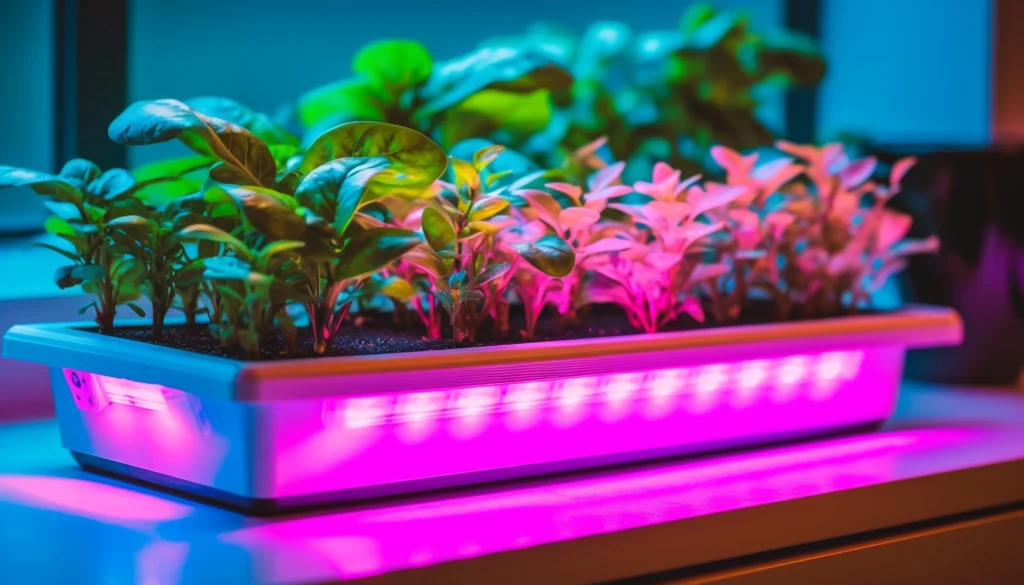
Different plants have different light requirements. Understanding this helps you avoid buying more light than you need — or not enough.
Herbs & Leafy Greens
Basil, parsley, cilantro, spinach, and lettuce are among the easiest plants to grow under LEDs. They need moderate light — around 12–14 hours per day — and do well with panels positioned 12–18 inches above the foliage.
A compact 30–45 watt LED bar or panel is plenty for a small kitchen herb setup. These plants respond quickly to adequate light, often showing visible improvement within a week of adding a grow light.
Succulents & Cacti
Succulents are often purchased without adequate consideration of their light needs. In nature, many succulents get 6–10 hours of direct sun daily. Indoors without a grow light, they frequently etiolate — growing stretched and pale as they reach for light.
Keep LEDs relatively close (6–12 inches) and aim for 10–12 hours of light per day. A low-wattage LED panel (15–30 watts) is usually more than sufficient for a small succulent collection.
Foliage Plants (Monstera, Fiddle Leaf Fig)
Popular foliage plants like Monstera deliciosa and Fiddle Leaf Figs are surprisingly adaptable. They don’t need intense light — they evolved under forest canopies, after all. A full spectrum LED placed 12–24 inches away for 8–12 hours daily will keep them healthy and actively growing.
The main benefit here isn’t explosive growth — it’s preventing the slow decline that happens in dim indoor spaces over winter.
Flowering Indoor Plants
Orchids, African violets, and peace lilies can all benefit from supplemental LED lighting. Flowering plants generally need more light than foliage plants, so aim for 12–16 hours daily and keep the light relatively close.
For orchids specifically, the difference a good LED makes can be dramatic — plants that haven’t bloomed in years will often rebloom when given consistent, appropriate light.
How to Set Up LED Grow Lights (Step-by-Step)
Setting up a grow light doesn’t need to be complicated. Here’s a straightforward approach.
Distance from Plants
Start at the manufacturer’s recommended distance, then watch your plants for 1–2 weeks. The table above gives solid starting points by plant type.
A simple test: hold your hand palm-up at plant level under the light. You should feel mild warmth, not heat. If it’s uncomfortably warm for your hand, it’s likely too intense for your plant.
Light Schedule & Photoperiod
Plants need a dark period just as much as they need light. A consistent 12 hour light schedule for plants like flowering varieties is a common approach, mimicking natural day length. Most foliage plants do well on 10–12 hours.
The key word is consistent. Plants regulate biological processes in part by day length. Irregular schedules can stress them and disrupt flowering cycles.
Using Timers for Automation
This is probably the most practical thing you can do: plug your grow light into a timer. Basic outlet timers cost $8–$15 at any hardware store and eliminate the need to remember to turn lights on or off.
A grow light timer setup takes about two minutes. Set it to your desired on/off times and forget it. This also ensures your plants get consistent photoperiods even when you’re traveling or your schedule changes.
LED Grow Light Electricity Cost Breakdown
This is a question most guides dodge, so let’s address it directly.
The formula:
(Wattage ÷ 1,000) × Hours Per Day × Days Per Month × Your Rate Per kWh = Monthly Cost
Example using U.S. average electricity rate of $0.16/kWh:
Let’s say you’re running a 45-watt LED panel for 14 hours per day:
- 45W ÷ 1,000 = 0.045 kWh per hour
- 0.045 × 14 hours = 0.63 kWh per day
- 0.63 × 30 days = 18.9 kWh per month
- 18.9 × $0.16 = ~$3.02 per month
| Setup | True Watts | Hours/Day | Monthly Cost (@ $0.16/kWh) |
|---|---|---|---|
| Small shelf (herbs) | 20W | 12 hrs | ~$1.15 |
| Medium setup | 45W | 14 hrs | ~$3.02 |
| Larger garden | 100W | 14 hrs | ~$6.72 |
| Premium setup | 200W | 16 hrs | ~$15.36 |
For most apartment growers, the cost is genuinely minimal — often less than a cup of coffee per month.
Common Beginner Mistakes
Even a good LED grow light won’t produce great results if these mistakes creep in.
Leaving lights on 24 hours. It seems logical that more light equals faster growth, but plants need darkness to rest and complete essential metabolic processes. Running lights 24/7 can cause stress, leaf damage, and actually slow growth over time.
Placing the light too close. Light burn is a real issue, especially with higher-powered LEDs. Symptoms include bleached or white patches on leaves, especially those closest to the light. Always start at the recommended distance and move closer gradually if needed.
Choosing the wrong spectrum for the plant. A purely red/blue “blurple” light works, but full spectrum LEDs produce better results for most houseplants. If you’re growing plants you want to observe closely, full spectrum lighting is also far more pleasant to work under.
Ignoring coverage area. A 45-watt panel won’t adequately light a 4×4 foot space. Match the light’s actual coverage rating to the area you’re trying to grow in.
Forgetting to adjust as plants grow. As plants get taller, the distance between the light and the canopy decreases. Check the height regularly and raise the light as needed.
Frequently Asked Questions
Do LED grow lights really work for indoor plants?
Yes — LED grow lights are highly effective for indoor plants when used correctly. They provide the photosynthetically active radiation plants need to grow, and modern full spectrum LEDs are capable of supporting everything from leafy greens to flowering plants. Hundreds of thousands of indoor gardeners across the U.S. use them successfully year-round.
How many hours should grow lights stay on?
Most indoor plants do best with 10–16 hours of light per day, depending on the plant type. Foliage plants typically need 8–12 hours, while herbs and flowering plants often benefit from 12–16 hours. The remaining hours should be darkness — plants need this rest period for healthy metabolic function.
How far should LED grow lights be from plants?
Distance varies by plant type and light intensity, but a general starting range is 6–24 inches. Succulents and cacti can handle closer placement (6–12 inches), while larger foliage plants often do fine with the light 12–24 inches away. Always check your specific light’s guidelines and watch your plants for signs of stress.
Are LED grow lights expensive to run?
No — they’re one of the more cost-effective lighting options available. A typical small grow light setup (20–45 watts) costs roughly $1–$3 per month to run at average U.S. electricity rates. Even a more substantial 100-watt setup comes in around $7 per month running 14 hours a day.
Can normal LED bulbs grow plants?
Standard LED bulbs can provide some benefit, especially if they’re “daylight” balanced (5000–6500K), but they’re not optimized for plant growth. They lack the specific spectral ratios plants need and are typically much lower intensity than purpose-built grow lights. For casual low-light plants, a bright daylight LED bulb may help in a pinch, but for consistent results, a dedicated grow light is worth the investment.
Is full spectrum better than red and blue?
For most houseplants and general indoor growing, yes. Full spectrum LEDs produce more balanced growth, are easier to monitor (no purple tint), and better support a wider range of plant functions. Red/blue lights work well and are often cheaper, but full spectrum is the better choice for most home growers.
Are LED grow lights safe for bedrooms?
Generally yes, with some caveats. LED grow lights produce very little heat compared to older technologies and don’t emit UV or infrared in harmful quantities. The main concerns are light pollution affecting your sleep and the constant operation of electrical equipment. Using a timer keeps them off during sleeping hours, and placing them in a separate room or behind a curtain eliminates any sleep disruption.
Conclusion
LED grow lights for indoor plants have genuinely democratized year-round indoor gardening. Whether you’re keeping a few herbs alive on a kitchen shelf or running a more ambitious setup of tropical foliage and flowering plants, there’s a practical, affordable LED option that fits.
The key takeaways: match your wattage to your coverage area, give plants consistent light schedules with adequate dark periods, start at the recommended distance and adjust based on what your plants tell you, and don’t stress too much about electricity costs — they’re almost always minimal.
Start simple. A single 30–45 watt full spectrum LED panel and a basic timer is enough to transform a dim corner into a thriving little indoor garden. Once you see the difference consistent, quality light makes, it’s hard to go back.
Disclaimer: The information provided in this article is for educational purposes only. Results with LED grow lights for indoor plants may vary depending on plant type, light intensity, and growing conditions. Always follow manufacturer instructions when using LED grow lights.
For authoritative guidance on LED grow lights for indoor plants, see this resource from Oklahoma State
Image Credits: Some diagrams and illustrations in this article were created using free resources from Freepik. You can view Freepik at https://www.freepik.com
Keeping your indoor plants healthy is about more than just providing light — it’s about understanding each plant’s unique needs. For readers who want to explore more indoor plant options, check out our guide on [7 Common Indoor House Plants: Easy Guide for Beginners]. Additionally, for practical tips on maintaining vibrant, thriving plants year-round, see [Indoor Plant Care Tips: 10 Proven Ways That Actually Work].