Best Soil for Indoor Plants (Beginner-Friendly Guide)
For the first two years of keeping houseplants I bought whatever potting soil was on sale at the garden centre, filled the pot, and assumed the soil part was done. It felt like a background detail — the boring bit before the actual plant care started.
Then my plants started struggling in ways I could not explain. Yellow leaves on a pothos that was getting decent light and regular water. A snake plant that sat completely static for seven months without a single new leaf. A small fiddle leaf fig that looked slightly worse every week despite my best efforts. I adjusted watering. I moved plants closer to windows. I tried a different fertilizer.
Nothing changed in any meaningful way.
It took me an embarrassingly long time to look at what was underneath the plant rather than the plant itself. When I finally did — when I actually unpotted a few of them and looked at the roots and felt the soil and paid attention to how it drained — the problem was obvious. The soil I had been using was dense, compacted, and holding moisture for days longer than it should have been. The roots were sitting in damp heavy mix that never fully dried out between waterings. Some of them had already started to rot.
The problem was not the plant. It had never been the plant. It was the soil.
One thing I still remember is how heavy those pots felt even three or four days after watering. At the time I thought that meant the plant was staying “well hydrated.” Now I realise it was the opposite — the soil wasn’t draining, and the roots never really got a chance to breathe.
Why Soil Matters More Than Most People Think
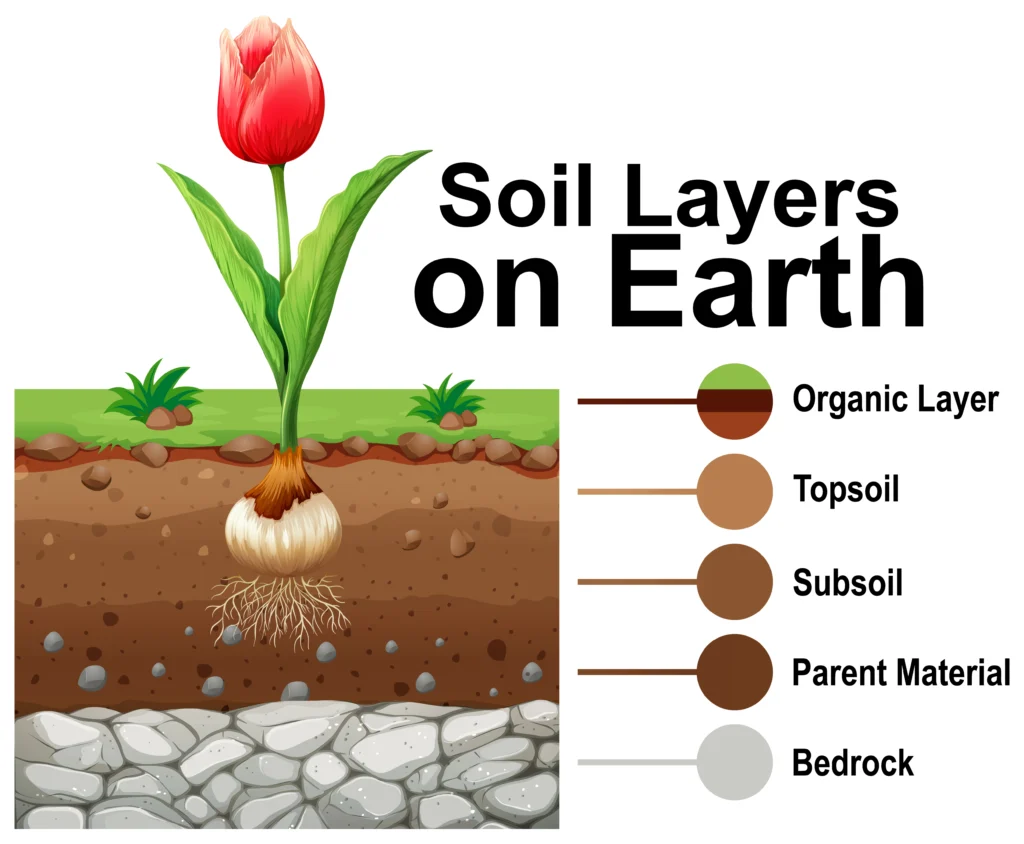
Most beginner plant advice focuses on watering and light — and those things matter enormously. But soil is the environment that roots live in every single day. It controls how much water the plant gets, how much air reaches the roots, and how effectively nutrients get absorbed. Get the soil wrong and watering correctly becomes almost impossible, because the soil itself works against you.
Think about what roots actually need. They need moisture — but not constant moisture. They need nutrients — but only if they are healthy enough to absorb them. And they need oxygen, which is something most people do not think about at all. Roots breathe. They need air pockets in the soil to function properly. Pack the soil too dense and those air pockets disappear. The roots suffocate slowly and the plant declines in ways that look like a watering problem or a light problem or a fertilizer problem — anything except the actual cause.
Healthy roots equal a healthy plant. It sounds simple — and it is — but it’s also the part most people overlook at the start. Everything the plant does above the soil surface depends entirely on what the roots can do below it. The soil is where that starts.
If you’ve ever struggled to tell whether a plant needs water or not, soil plays a bigger role than most people realize. I go deeper into that in my guide on overwatering vs underwatering, because the soil you use often determines which problem you end up dealing with.
What Makes the Best Soil for Indoor Plants?
Not all potting soil is the same and the differences matter more than the labels suggest. Here is what the best soil for indoor plants actually does — broken down into four things worth understanding before you buy anything.
I actually tried using a completely fast-draining mix at one point — almost 50% perlite — thinking more drainage would solve everything. It didn’t. The soil dried so fast that I ended up underwatering without realising it. That’s when I understood it’s not about maximum drainage — it’s about balance.
Good drainage. The soil should allow excess water to move through and out of the pot relatively quickly rather than sitting in the root zone. After watering you should see water flowing freely from the drainage hole within a minute or two. If water pools on the surface and takes a long time to sink in, or if the pot feels heavy and wet for days after watering, drainage is the problem.
Airflow around roots. This is the one most beginners never consider. A light, slightly loose soil structure maintains small air pockets throughout the mix even when moist. Those pockets are where oxygen reaches the roots. Compact, heavy soil collapses those pockets and creates the suffocating conditions that lead to root rot even without consistent overwatering.
Holds some moisture without holding too much. The balance here is the whole game. Soil that drains so fast that water runs straight through does not give roots time to absorb moisture. Soil that holds moisture for too long keeps roots permanently damp. The goal is soil that retains enough moisture to support the plant between waterings while drying out enough to let roots breathe.
Light and loose texture. Pick up a handful of good indoor potting mix and it should feel almost fluffy — lightweight, slightly springy, not dense or clay-like. If it feels heavy and compacts easily when squeezed, it is going to cause problems in a pot regardless of how carefully you water.
What Happens When the Soil Is Wrong
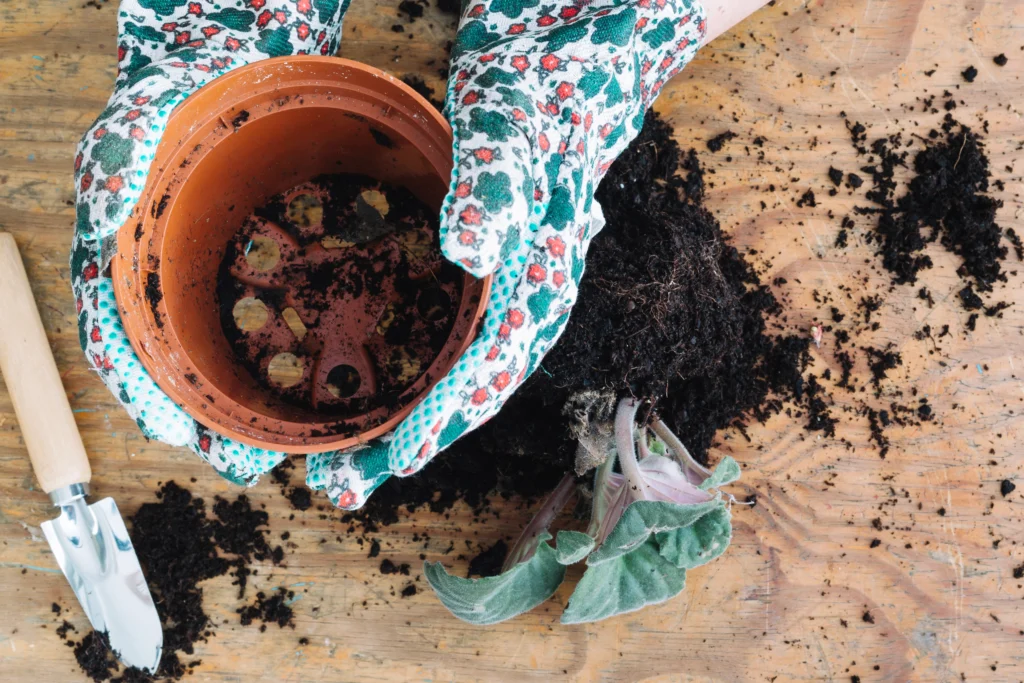
Most plant problems start below the surface where you cannot see them. This is what goes wrong with the two most common soil mistakes:
Soil that is too dense and heavy. Water gets trapped in the compact mix and cannot drain efficiently. The soil stays wet for days longer than it should. Roots sit in constantly damp conditions, oxygen cannot reach them, and fungal organisms that cause root rot move in. The plant starts yellowing and drooping — which looks exactly like underwatering — and the instinct is to water more. More water makes everything worse. By the time the real problem is visible the roots are already damaged.
This is what was happening in my own pots for two years. The soil I was using looked fine on the surface. It was only when I started paying attention to how long it stayed wet after watering that I realised something was wrong with the mix itself rather than my watering habits.
Soil that drains too fast. On the opposite end, a mix that is too sandy or gritty — the kind sometimes sold for succulents but used for plants that need more moisture — lets water run straight through the pot without the roots having time to absorb it. The plant stays consistently underwatered even with regular watering. Growth stalls, leaves look dry and crispy at the edges, and the soil always feels bone dry within a day of watering. More frequent watering helps but never fully solves the problem because the issue is structural.
No drainage at all. A pot without drainage holes combined with any soil type creates permanently saturated conditions at the bottom of the pot. Water has nowhere to go. The lower root zone stays perpetually wet regardless of how carefully you water above. This is one of the most reliable ways to kill an indoor plant slowly and it does not matter how good the soil mix is if the water cannot escape.
Types of Soil You Will See — And What They Actually Mean
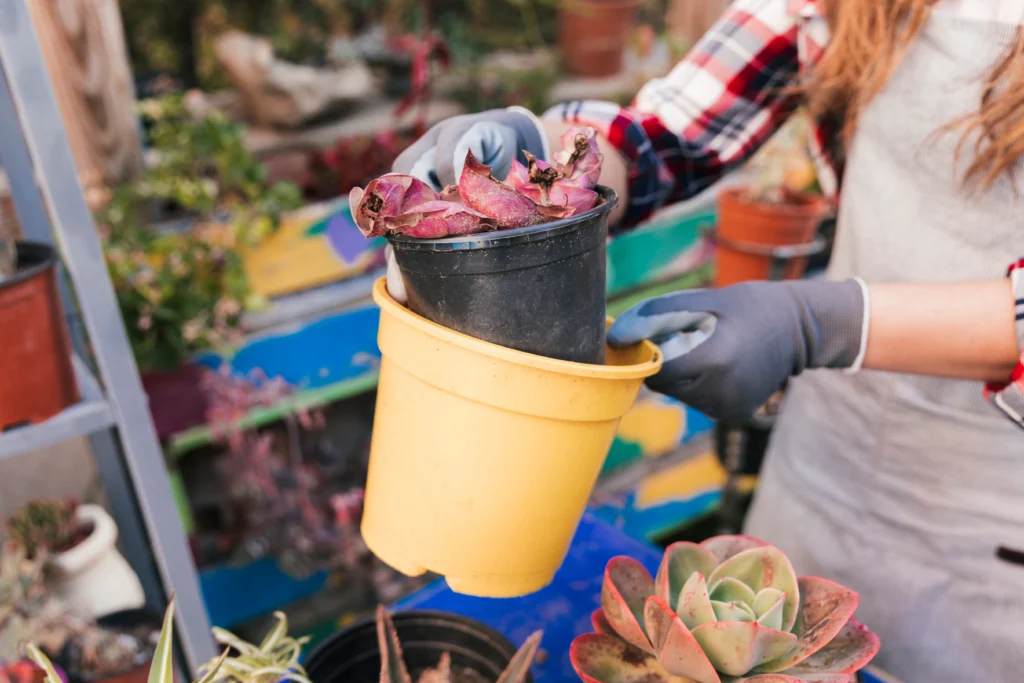
Walking into a garden centre and looking at the soil section is genuinely confusing the first time. Here is what the main types actually are in plain language:
Regular potting soil is a general-purpose mix designed for container plants broadly. It typically contains peat moss or coco coir, some perlite, and basic nutrients. It holds moisture reasonably well and works for many common houseplants. The problem is that quality varies enormously between brands — some are light and well-draining, others are dense and heavy. You genuinely cannot tell from the bag alone, which is why I always open and squeeze a handful before buying if I can.
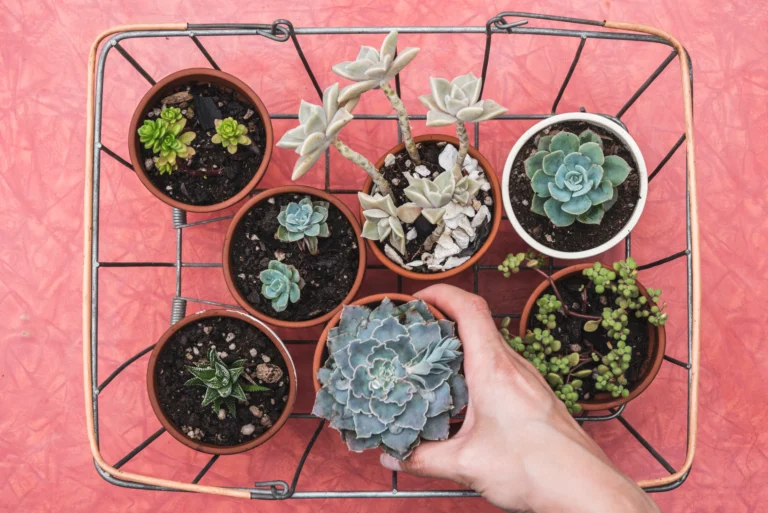
Succulent and cactus mix is specifically formulated for plants that need fast drainage and do not want to sit in moist soil at all. It is usually sandier and grittier than regular potting mix and dries out very quickly after watering. Use it for succulents, cacti, and any plant adapted to dry conditions. Do not use it for tropical foliage plants that need consistent moisture — they will struggle in soil that dries out this fast.
Indoor plant mix or houseplant mix is a balanced formula designed specifically for potted indoor plants. Usually lighter than outdoor potting soil, with better drainage than generic mixes. This is where I start for most of my houseplants and adjust from there by adding perlite if I want faster drainage for a particular plant.
Peat-based mix holds moisture for longer than other types and is slightly acidic which suits some plants well. It can compact over time and becomes difficult to re-wet once it dries out completely — if you have ever watered a pot and had the water bead on the surface and run down the edges rather than soaking in, that is usually compacted peat. Good for plants that prefer consistent moisture but requires more careful watering than faster-draining alternatives.
Key Ingredients Worth Knowing
You do not need to memorise soil science to choose good mix. But knowing what a few common ingredients do helps you read labels more intelligently and adjust mixes when needed.
Perlite is the small white particles you see in most quality potting mixes — they look a bit like tiny white beads or popcorn. Perlite is volcanic glass that has been heated and expanded. It does not hold water at all, which is exactly the point — it creates permanent air pockets in the soil and improves drainage without adding weight. Adding more perlite to a mix makes it drain faster and dry out more evenly. This is the single most useful amendment for most indoor plant problems related to soil.
Coco coir is made from coconut husks and is used in many modern potting mixes as a more sustainable alternative to peat moss. It holds moisture well, stays loose and light over time, and is slow to compact compared to peat. It also re-wets easily after drying out which makes it more forgiving than peat in that specific situation.
Peat moss does a similar job to coco coir — holds moisture, keeps soil soft — but compacts more over time and can be difficult to re-wet once completely dry. Still widely used and effective when fresh, just worth knowing about the compaction issue over long periods.
Compost adds nutrients and supports beneficial microbial activity in the soil. A small amount mixed into potting soil gives plants a slow gentle nutrition source without the risk of fertilizer burn. I add a small handful when repotting most of my plants and it makes a noticeable difference in how quickly they establish in new soil.
Sand in a mix — specifically coarse horticultural sand, not fine beach sand — improves drainage similarly to perlite. Used more commonly in cactus and succulent mixes. Fine sand actually compacts and worsens drainage so the type of sand matters.
How to Choose the Right Soil for Your Specific Plant
The honest answer is that most common houseplants do well in a similar basic mix with small adjustments. Here is a simple decision guide without overthinking it:
At this point, I don’t really overthink soil anymore. If I’m unsure, I default to the same base mix and adjust slightly depending on how the plant behaves over the next few weeks rather than trying to get it perfect on day one.
For most tropical foliage plants — pothos, philodendrons, monsteras, peace lilies, calatheas — a balanced indoor potting mix with added perlite is the reliable starting point. Mix roughly two parts potting soil to one part perlite and you have a mix that drains well, holds enough moisture, and stays loose enough for healthy root growth.
For low-light plants — snake plants, ZZ plants, cast iron plants — lean toward the faster-draining end. These plants use water slowly in dim conditions and need soil that dries out efficiently between waterings. The two-to-one mix above works well. Some people go heavier on the perlite — up to half and half — for snake plants specifically and the plants respond well.
For succulents and cacti — use a purpose-made succulent or cactus mix, or make your own by mixing regular potting soil with coarse sand or perlite at roughly equal parts. These plants come from low-nutrient, fast-draining environments and need soil that mimics those conditions. Regular potting mix alone will stay too wet for them.
For orchids — orchids are not actually planted in soil at all. They grow in bark-based mixes, sphagnum moss, or specialised orchid medium that allows their roots to dry out quickly and get significant air exposure between waterings. If you pot an orchid in regular potting mix it will almost certainly rot.
For moisture-loving plants — ferns, calatheas, some beginner plants that prefer consistent moisture — a peat or coco coir based mix that retains slightly more moisture is appropriate. Still use pots with drainage holes. The goal is moisture-retentive not waterlogged.
A Simple Soil Mix You Can Make at Home
This is the mix I use for the majority of my indoor plants and have used consistently for about two years without any root rot issues:
I’m sure there are more advanced mixes out there, but this is the one that has been the most consistent for me across different plants without needing constant adjustment.
Two parts standard indoor potting mix. One part perlite. Optional small handful of worm castings or compost mixed in at repotting time.
That is it. No special ingredients, no complicated ratios, nothing that requires sourcing unusual materials. The potting mix provides the base moisture retention and nutrients. The perlite improves drainage and keeps air pockets open. The worm castings add a slow gentle nutrition source that lasts several months.
Mix it in an old bucket before filling the pot. It should feel light and slightly springy — not heavy or dense. If it clumps together easily when squeezed and holds that shape, add a bit more perlite. If it falls apart immediately and feels almost sandy, it may drain too fast for moisture-loving plants and you can reduce the perlite slightly.
This mix works for most indoor plants without overthinking it. The only plants I do not use it for are succulents — which get a heavier perlite ratio — and orchids, which get bark medium entirely.
Signs Your Soil Needs to Be Changed
Soil does not last forever in a pot. Over time it compacts, loses its structure, and the nutrients it contained get depleted. Here is what tells me a plant needs fresh soil:
Water sits on the surface for more than a minute before soaking in. This means the soil has compacted to the point where it can no longer absorb water efficiently. The water is likely running down the edges of the pot and out the drainage hole without reaching the root zone at all.
The soil smells sour, musty, or slightly off. Healthy soil smells earthy — almost like fresh rain. A sour or unpleasant smell usually means anaerobic bacteria have moved in due to consistently waterlogged conditions. This is serious and the plant needs to come out so the roots and soil can both be assessed.
The roots are dark or mushy when you unpot the plant. Healthy roots are white to light tan and firm. Dark, soft roots indicate rot. At this point fresh soil is not optional — it is urgent.
The plant has stopped growing entirely during what should be an active growing period and you have ruled out light and watering as causes. Old depleted soil that has given up most of its nutrients and lost its structure is often the culprit in a plant that has been in the same pot for more than a year without any feeding.
White crusty deposits forming on the soil surface or around the pot rim. This is salt buildup from fertilizer or mineral-heavy tap water. It can be flushed with a thorough watering, but if it is extensive and recurring it is often easier and better for the plant to refresh the soil entirely.
When to Change or Refresh the Soil
Generally speaking, most houseplants benefit from fresh potting mix every twelve to eighteen months — not necessarily a bigger pot, just fresh soil in the same one. Nutrients deplete, structure breaks down, and the physical properties of the mix change over time regardless of how well you care for the plant.
Beyond the general timeline, change the soil when you repot into a larger pot — always use fresh mix rather than reusing old soil from the same pot. Change it when you see the warning signs above regardless of how long it has been. And change it whenever you are diagnosing a sick plant — starting with fresh well-draining soil eliminates one variable and often solves more than you expected.
I refresh the soil on all my plants during spring repotting, which I do each year in March or April when growth is picking back up. Some plants stay in the same pot size for years — they just get fresh soil and a root check each spring. The difference in how they perform through the growing season compared to leaving them in year-old depleted mix is consistently noticeable.
Common Soil Mistakes Beginners Make
Using garden soil indoors. This is the most common mistake and one I made myself initially. Garden soil is formulated for outdoor growing conditions — it is heavy, dense, compacts badly in a pot, drains poorly, and often carries pests or diseases that do not cause problems outdoors but thrive in the warm conditions of a home. It is not a cheaper version of potting mix. It is a different product entirely and it will cause problems in any indoor container.
Using any potting mix without checking its quality. Not all potting soil is good potting soil. Some budget mixes are so dense and peat-heavy that they behave more like garden soil in a pot. Squeeze a handful before you buy it if you can. If it feels heavy and compacts into a ball easily, look for something else or plan to add significant perlite before using it.
Ignoring drainage holes. Covered earlier but worth repeating here because it is responsible for more plant deaths than any specific soil problem. The best soil mix in the world does not solve the problem of water having nowhere to go. Drainage holes are not optional.
Never changing old soil. Plants that stay in the same potting mix for two or three years are living in increasingly depleted, compacted, salt-loaded conditions. The soil that worked well when the plant was first potted is a different material entirely two years later. Refreshing soil regularly is one of the simplest and most impactful maintenance habits in indoor plant care.
Most problems start below the surface where you cannot see them — which is exactly why soil problems are so easy to overlook for so long.
A Quick Setup for Healthy Soil
The habits that prevent most soil-related problems are straightforward once you have them:
Always use pots with drainage holes. No exceptions regardless of how beautiful a pot looks without them.
Use a light airy mix — either a quality indoor potting mix or the simple two-to-one potting mix and perlite combination above. If the soil feels heavy in your hand it is probably too dense for most houseplants.
Do not press the soil down hard when potting. It is tempting to pack it in firmly to feel stable but compressing the soil destroys the air pockets that roots need. Fill the pot loosely, tap it gently a few times to settle, and stop there.
Check the soil before every watering using the finger test. Let the soil tell you when to water rather than the calendar or how the plant looks from across the room.
Frequently Asked Questions
Can I use garden soil for indoor plants?
No — and this is one of the clearest beginner mistakes to avoid. Garden soil is too heavy and dense for container growing, compacts badly in a pot, drains poorly, and often carries outdoor pests or pathogens that cause problems indoors. Even if it looks similar to potting mix it behaves completely differently in a confined pot. Always use a mix formulated for container plants.
What is the best soil for a beginner with no experience?
Start with a standard indoor potting mix and add perlite at roughly one part perlite to two parts mix. This single adjustment makes most average quality potting soils significantly better draining and more suitable for the majority of common houseplants. You do not need anything more complicated than this to start well.
How do I know if soil is actually good before I use it?
Squeeze a handful. Good indoor potting mix feels light and slightly springy and does not hold a compact shape when you release it. It should look loose with visible larger particles — perlite, bark pieces, visible structure. If it feels heavy, dense, and compacts easily into a ball it is probably too moisture-retentive for most houseplants without significant amendment.
Do indoor plants really need different soil from outdoor plants?
Yes — the growing conditions are completely different. Outdoor soil is part of a large connected system where drainage happens naturally across a wide area, microorganisms constantly break down organic matter, and roots can extend far beyond the immediate planting zone. A pot is a closed, confined system where none of that applies. Potting mix is formulated specifically to provide drainage, aeration, and moisture retention in a small contained volume that outdoor soil cannot replicate.
If you want a complete system instead of fixing problems one by one, my full guide on Indoor Plant Care Tips: 10 Proven Ways That Actually Work walks through the exact habits that keep plants healthy long-term — from watering and light to soil and repotting.
Final Thought
The right soil makes every other part of plant care easier. Watering becomes more predictable because you know how the soil behaves. Root problems become less common because drainage and aeration are built into the mix from the start. Fertilizing works better because healthy roots in good soil can actually absorb what you give them.
The wrong soil makes everything harder — not because you are doing anything wrong, but because the foundation is working against you from the beginning.
Start simple. A good indoor potting mix with added perlite covers most plants without any complexity. Pay attention to how your soil drains and how long it stays wet after watering. Change it when it stops performing well rather than leaving plants in depleted compacted mix year after year.
The plant you have been blaming is probably fine. Check what it is growing in first.
Most of my plants improved within about three to four weeks after switching to a better mix — not instantly, but gradually enough that it was obvious something had changed.
This article is for informational purposes only. Plant care outcomes vary depending on specific environmental conditions, plant species, and setup. For persistent plant health issues consult a certified horticulturalist or your local plant nursery.
Image Credit
All images used in this article are sourced from Freepik and are licensed for free use under the Freepik free license. Original creators are credited to their respective authors on Freepik.com. Visit freepik.com for full licensing details. All trademarks and brand names referenced remain the property of their respective owners.
Authoritative Sources
Royal Horticultural Society — rhs.org.uk — evidence-based guidance on container growing, potting mix selection, and indoor plant soil requirements.
University of Minnesota Extension — extension.umn.edu — research-backed guides covering potting soil composition, drainage, and container plant root health.